Showing posts with label Games. Show all posts

31 July 2014

SIGGRAPH 2014 to Demo Latest Real-Time Advancements

Ghosts
Destruction Sequences in "Call of Duty: Ghosts" (see below for description)
The SIGGRAPH 2014 Real-Time Live! program will present a 90-minute show of the most cutting-edge real-time work from the past year. Real-Time Live! is part of the Computer Animation Festival and is the premier showcase for the latest trends and techniques for pushing the boundaries of interactive visuals.

"For one night only, SIGGRAPH attendees will enjoy a unique and fast-paced display of the most innovative real-time techniques for interactive systems and computer graphics,” said Nicolas Gonzalez, SIGGRAPH 2014 Real-Time Live! Chair from Deloitte Consulting. "Our international jury truly outdid itself as this year's show is mind-boggling with fascinating advancements that we cannot wait to show off."

The 2014 Real-Time Live! program will take place on Tuesday, 12 August at 5:30 p.m. PST in the West Building of the Vancouver Convention Centre. Each live presentation lasts less than 10 minutes and is presented by the original artists and engineers. As an added bonus, the 2014 Real-Time Live! program includes presentations from the Augmented/Virtual Reality Contest finalists, a brand-new conference event.

For more information on Real-Time Live! and the Augmented/Virtual Reality Contest, visit s2014.siggraph.org. Tickets to Real-Time Live! are available at the Full and Select Conference registration levels and start at $230 USD.

SIGGRAPH 2014 Real-Time Live! Highlights:

Destruction Sequences in "Call of Duty: Ghosts"
Presenters: David Johnson, Alessandro Nardini, Infinity Ward
In an effort to raise the bar for destruction sequences in a real-time game engine, non-localized particles, "instant pop," low density, generic fracturing, and more were identified and addressed through several artistic techniques and technical advancements for "Call of Duty: Ghosts".
NVIDIA FlameWorks: Real-Time Fire Simulation
Presenters: Simon Green, Nuttapong Chentanez, Aron Zoellner, Johnny Costello, Kevin Newkirk, Dane Johnston, NVIDIA Corporation
NVIDIA
FlameWorks is the first system to bring cinema-quality volumetric fire, smoke, and explosion effects to real-time graphics. The demo simulates and renders more than 32 million voxels per frame, at around 30 frames per second.
Real-Time Animation of Cartoon Character Faces
Presenters: Emiliano Gambaretto, Charles Piña, Mixamo, Inc.
Character

This live demo allows a viewer to stand in front of a webcam and animate a 3D character in real time. The video stream is processed by Mixamo Face Plus proprietary technology, the facial expression of the user is extracted, and the emotional facial information is transferred to the 3D character.

25 July 2013

SIGGRAPH 2013 Real-Time Live Chair, Abe Wiley, discusses the amazing world of Real-Time Live, what the program is all about, and what content was shown at this year's show.

22 July 2013

Hear from Attendees on What They Are Excited About @ SIGGRAPH 2013

SIGGRAPH's videography team (SCOOP) ventured inside and outside the halls of the Anaheim Convention Center on Sunday (21 July) to ask our enthusiastic and sometimes slightly jet lagged attendees what they're looking forward to most at SIGGRAPH 2013.

14 May 2013

Q&A with Evan Hirsch, SIGGRAPH 2013 Business Symposium Chair

Following is a brief interview with Evan Hirsch, SIGGRAPH 2013 Business Symposium Chair from Engine Co. 4.  Evan has served in various volunteer SIGGRAPH roles over the years and this year marks his 22nd consecutive SIGGRAPH.  He has worked with industry leaders throughout the US, Europe, and Asia for 25 years. 

In 2011, he founded Engine Co. 4 to provide strategic consulting services on immersive multi-platform user experiences,creative development, and tactical firefighting advice for large computer graphics projects. Recent clients of Engine Co. 4 include PopCap Games, DeNA, The USC Institute for Creative Technology, and Uncharted Territory.

Previously, he served as vice president of creative development at THQ, where he was responsible for raising production values and creative processes at nine game studios. Before joining THQ, as creative director at Microsoft’s Live Labs and Surface teams, he played a lead role in defining the user experience for Surface, the first widely manufactured and distributed multi-touch computer.


This is the 3rd year for the Symposium, what is going to different (or the same) from previous years?
We know that the market for our work has seen many explosions in the last year and more. Sadly those explosions I'm referring to are not CG effects on screen, but real events that happened in studios, boardrooms, balance sheets, and ultimately, careers.

In thinking about building on the incredible work Jill (Smolin) did to establish the Symposium, I wanted to turn the idea of disruption on its head, into ideas around innovation that would be useful to our attendees, and hopefully serve to inspire them as they go forward in their businesses.  Every session this year is focused on disruption and/or innovation in business.  Equally I wanted to ensure that we heard many different voices from the diverse parts of our businesses to cross-fertilize thinking.

Finally, we heard from many of our attendees last year that it’s very difficult for them to build and grow their own careers.  We heard it can be lonely at the top and once you stop pushing pixels it becomes more difficult to navigate your career.  So this year we're going to have an optional session on mentoring for those attendees who want to mentor and/or be mentored. This topic may not look that sexy on the surface, but as someone who benefited so much from some incredibly generous and kind mentors via SIGGRAPH throughout my career, this is an area I am most excited about.

Who is your target market?
The people who will get the most out of the Symposium are the studio executives and their counterparts. For example, the CEO’s, GM’s, CFO’s, CTO’s, CCO’s, VP’s, heads of production and executive producers for VFX facilities, Commercial and Animation houses, Game studios, new media boutiques as well as the senior production people like VFX supervisors, VFX producers, senior development directors, and any other production people who manage managers and supervisors.

If you want to change or grow your level of impact in the business of content creation, the Symposium is where you want to learn, share, and network.  

 
What are some of the hotter topics that will be addressed?
The explosion of platforms is one topic. Rich Hilleman, (Chief Creative Officer of EA) recently told me that a few years back he had maybe five to seven platforms that he had to pay attention to and that maybe there would be a new platform to evaluate each year.  Now he has to keep his eyes on almost 100 platforms and that a new one is announced almost every month. If you focused on film, you may think this is not applicable, but with the explosion in platforms for high-definition linear content with everybody from Amazon, Netflix, and some very unconventional players getting into the space, this global tidal wave has the potential to benefit a lot our attendees. Yes, the market is tougher for traditional VFX and game production, but it’s equally filled with opportunities for innovation and growth.

Another topic I am personally interested in is how facilities and studios can use innovation to create or clarify markets. The conventional wisdom was that “true R&D” was limited to large FX facilities or universities, but our panel of CTO’s from companies large and small will address how true R&D can be done in facilities of any size to carve out strategic advantages of their own. 

And we are still planning to have some quick, five and 10 minute crash courses on specific topics that we will be revealing very soon.

What are the most compelling reasons why people should attend?
In both of the Symposiums to date, we had incredibly honest, unfiltered, and foretelling conversations with some of our speakers.  We have worked very diligently to create an environment where our attendees and speakers can talk off-the-record, with no-holds barred. What other conference lets you hear those conversations, cross paths and share ideas with business and creative leaders that range from film, games and broadcast to NASA scientists, world-class researchers and car designers?

What motivated you to become involved?
Selfishness. All joking aside, as my career moved from being on the box with Houdini, Maya, and game engines, to being “creative” with PowerPoint and Excel, I quickly realized that my options for learning, growing, and staying abreast of the changes in the business were becoming more and more limited.  When I heard that Jill was putting the Symposium together, I immediately volunteered to help out.

What do you identify as the biggest 3 threats to content creators?
Tunnel vision, complacency, and hubris.

A large segment of my business is working with clients to help them with project and studio-level turn-arounds. I get to see firsthand how teams find themselves in tough corners.  With many CG clients, I often find that they developed a method, process, and/or business practice that was quite good and effective (or sometime less so), but they’d hold on to that methodology with a very, very firm grip. When times were good, they were too busy to look up and around to see how things were changing around them and get in front of those challenges. Then when things slowed down, the fear of what might not happen would keep them holding on longer and tighter.

I have also been advising some financial clients on possible investments in our space as a result of working with them, and looking inside their companies that are widely perceived as successful, leading companies.

Granted, in doing this work I have the advantage of 20-20 hindsight, but I have been utterly amazed at some of the decisions that were made.  In each case, it wasn’t the decision by an exec team to make one big bet or take one big risk, but the decision to take two or three risks at one time.  It’s the hubris behind the belief that “we are so good, so smart, so brilliant that nobody else can do X.”  Then one thing goes wrong, something else unexpected pops up and there was no real mitigation strategy -already in place- in case any of these things went sideways. 

Which in some ways bring me back to your question, “Why did I get involved with the Symposium?”  Since I can’t talk publicly about my work, I want to create a community where we can learn from each other and help each other grow.

After 25 years in this industry, how do you stay motivated?
The constant evolution of technology and creativity in this business guarantees that I will never ever be bored, and that certainly keeps me on my toes. It’s also why I have not missed a single SIGGRAPH since 1991.  Seeing the work that is presented and shared, the endless creativity of how people in this community come to define and solve problems is deeply inspiring to me. Every year, the bar is raised which only stokes my hunger to keep learning and growing. 

Some years it’s small, other years it a “big thing” but I have yet to attend a conference where sometime later in that year, I couldn’t apply some knowledge gained at the conference and use it to innovate a project I was working on.   

If your children were considering a career choice in game development or the movie industry, what direction would you give them?
Pick a craft you are deeply passionate about and do the work. The real hard work.  There are no shortcuts and if a school tells you that anything other than hard work and putting in the time will get you there, then run, don’t walk away from that school.

The people I know in the business who succeed through thick and thin have a craft they love, and love working hard at it.  Make sure that whatever program it is, it teaches problem solving for all four years.  I am not a fan of the generic game design or generic “Digital” programs that confuse learning software with learning a craft. Whether that craft is physics (the best TD’s I have worked with are often physics grads), math, or in the arts, photography, industrial design (my background), something in theater, sculpture, true character animation (acting), I have always found that people who can do something in the physical, real world and then translate that thought process and craft to the digital world never cease to amaze me. 

The SIGGRAPH 2013 Business Symposium is open to the public, but a separate registration is required and attendance is extremely limited.  The event takes place 21 July 2013 at SIGGRAPH.

07 August 2012

SIGGRAPH 2012 Emerging Technologies Highlight Tour

Join SIGGRAPH 2012 Emerging Technologies Chair Preston Smith from the Laureate Institute for Brain Research as he leads a brief tour of this popular, interactive technology area that features 26 cutting-edge exhibits.

31 May 2012

Q&A with the 2012 Technical Papers Chair Hanspeter Pfister from Harvard

Following is a brief conversation with Hanspeter Pfister, the SIGGRAPH 2012 Technical Papers Chair from Harvard University. Pfister is Gordon McKay Professor of Computer Science in the School of Engineering and Applied Sciences. 

His research lies at the intersection of visualization, computer graphics, and computer vision. He received his PhD in computer science in 1996 from the State University of New York at Stony Brook and his MS in Electrical Engineering from the Swiss Federal Institute of Technology in Zurich, Switzerland, in 1991.


Briefly describe your past experiences as a SIGGRAPH volunteer:
I attended my first SIGGRAPH in Chicago in 1992 and got hooked immediately. From 1994 to 1996, I was a student volunteer, hanging out mostly at the International Center and occasionally crimping ethernet cables -- great times! In 2001, I was invited to join the SIGGRAPH Technical Papers Committee for the first time. In 2005, I was jury member of the Sketches program, which I chaired in 2006. And I've been a member of the Papers, Courses, and Sketches Committees for SIGGRAPH and SIGGRAPH Asia numerous times.

What motivated you to serve as this year's Technical Papers Chair?
It is a huge honor to be asked to become Technical Papers Chair, so when Rob Cook -- chair of the Papers Advisory Group -- asked me, I immediately said yes. The main motivation was to give back to the community that has been a big part of my career for many years. And I was looking forward to being a part of (and shaping) the process that selects the highest quality papers for acceptance at SIGGRAPH. 

How exactly is the Jury selected?
Selecting the Technical Papers Committee is the most important thing a Technical Papers Chair does. The first step was to select the Papers Advisory Board, which consisted of Marc Alexa (SIGGRAPH 2013 Chair), Kavita Bala (SIGGRAPH ASIA 2011 Chair), Fredo Durand, Hugues Hoppe (SIGGRAPH 2011 Chair), Holly Rushmeier, and Peter-Pike Sloan (SIGGRAPH ASIA 2012 Chair). They were a tremendous help throughout the process and helped me to select the committee. We had to identify the experts in various communities, balance the areas in which we anticipated submission, find the right mix between experience and fresh blood, and consider term limits to make sure that new members join us each year. It was a daunting, but very exciting task.

How did the Jury process go this year?
Besides a server crash on submission day, it went exceedingly well. The 53 members of the Papers Committee did a tremendous amount of work, as did the hundreds of external reviewers. I had a lot of support from my assistant Angela Anderson from Talley Management, and a host of other people who helped to run the process smoothly and professionally. Overall we accepted 94 papers out of 449 submissions for an acceptance rate of 21%, and referred another 9 papers to the ACM Transactions on Graphics.

Did you notice any trends in the submissions?
In addition to traditional areas such as rendering, surface modeling, image and video processing, fluid simulation, and character animation, we accepted papers in emerging areas such as 3D fabrication, light field displays, real-time sound synthesis, and tactile feedback devices. I am especially excited about papers that stretch the definition of graphics because they help evolve our field and make SIGGRAPH vibrant and exciting.

Did the content for S2012 meet your expectations?
Seeing the huge number of submissions and considering how much work went into them is humbling. I am deeply thankful to all the authors who sent their work to SIGGRAPH 2012, and to all the reviewers and committee members for selecting the best papers this year in computer graphics and interactive techniques. We ended up with a terrific and exciting program with outstanding papers in all of the technical areas.

How can the Technical Papers program make certain that it remains relevant for years to come?
Looking at the creativity and ingenuity of the submissions this year I am not worried about the future. And the great thing about SIGGRAPH is that it is able to reinvent itself. As long as we continue to evolve the definition of computer graphics and interactive techniques and allow for new and fresh ideas to be published we will remain relevant. And I have no doubts that visual and interactive techniques will continue to play a huge role in our everyday lives.

What is your advice to someone considering submitting a future SIGGRAPH technical paper?
Read the FAQ on our web site! Many of the questions I received have been answered there, and the process is described in great detail. And then of course produce some outstanding work that is inspiring, significant, and maybe unexpected. Then spend the effort and time to write a good paper about it. The quality of the writing really matters, and I would suggest you look carefully at some of the great papers from previous years. It does take effort, but I can assure you that every paper is treated with respect and will receive thoughtful, helpful reviews.

Briefly describe one of your more intriguing ongoing projects at Harvard:
I am very excited to work with my neuroscience collaborators at the Harvard Center for Brain Science on reconstructing the detailed neural circuitry of the brain, one of the grand challenges of this century. We are dealing with tera- and soon petabytes of image data from electron microscopy and are working on fully-automated reconstruction techniques that are scalable and efficient. The challenges are tremendous in all areas of computer vision, visualization, graphics systems, and network analysis -- I am having a blast.

What were some of the key things you took away from your 11 years at Mitsubishi Electric Research Laboratories (MERL)?
Work with people who are smarter than you -- at MERL I had the privilege to be surrounded by some of the best researchers and work with some of the best students around the world. Work on practical problems to drive technical innovation -- the other way around is a lot harder. And of course my boss and mentor, Joe Marks, taught me to delegate, delegate, delegate -- a skill that serves me well as a faculty member.

Would you recommend a career in computer science to your daughters and how did you pick their names?
My daughters Lilly (9) and Audrey (6) already monopolize the family iPad and laptop with their games and e-books. They are learning at an early age what makes computers so exciting: the ability to create and simulate anything. I am sure that they will pick up computer science skills in whatever career they choose.

As for how we picked their names: We like old fashioned names and wanted to make sure their names are somewhat unique, so we checked their popularity on Martin Wattenberg's fabulous Baby Name Wizard visualization. Of course the irony is that both names had a huge uptick in popularity since then. I guess we were trend setters.

21 May 2012

SIGGRAPH 2012 Technical Papers Preview

The SIGGRAPH 2012 Technical Papers program is the premier international forum for disseminating new scholarly work in computer graphics and interactive techniques. The 39th International Conference and Exhibition on Computer Graphics and Interactive Techniques, 5–9 August 2012 at the Los Angeles Convention Center, features Technical Papers that detail new advances across many fronts, including 3D display technology, photographic prints for HDR images, textile design, and more.

“This year’s program features papers that propel the field forward as rapidly and vibrantly as possible, while at the same time keeping us well-grounded academically, ensuring that SIGGRAPH remains a breeding ground for significant new areas of research,” said Hanspeter Pfister, SIGGRAPH 2012 Technical Papers Chair from Harvard University.

The papers to be presented were chosen by a distinguished committee of academia and industry experts. Out of 449 submissions, 94 papers were accepted to SIGGRAPH 2012, representing an acceptance rate of 21 percent.

This year’s Technical Papers program also includes conference presentations for 38 papers published this year in the journal ACM Transactions on Graphics (TOG). A complete listing of all selected Technical Papers will be available on the SIGGRAPH 2012 web site in late May.

Highlights from the SIGGRAPH 2012 Technical Papers program:

Tensor Displays: Compressive Light Field Synthesis Using Multilayer Displays with Directional Backlighting
Authors: Gordon Wetzstein, Douglas Lanman, Matthew Hirsch, and Ramesh Raskar, MIT Media Lab


This paper presents a new display technology for glasses-free stereo viewing. Combining multiple layers of LCD, directional back-lighting, temporal modulation, and a new mathematical formulation allows for greater depths of field, wider fields of view, and a thinner display.

Practical application as suggested by the Technical Papers Chair: Glasses-free stereo display.

Printing Spatially-Varying Reflectance for Reproducing HDR Images
Authors: Yue Dong, Microsoft Research Asia; Xin Tong, Microsoft Research Asia; Fabio Pellacini, Dartmouth College and Sapienza University of Rome; and Baining Guo, Microsoft Research Asia


When traditional photographs are printed, the range of brightness can be heavily compressed, and the result can look flat. This paper presents a solution for viewing HDR images using a reflective sheet of paper, glossy ink, and a torch light illuminating the paper. With the proposed technique, one can get a better sense of the range of brightness in the scene and adjust it by moving the light or the paper.

Practical application as suggested by the Technical Papers Chair: Printing high-dynamic-range images, keeping brightness fidelity.

Structure-Aware Synthesis for Predictive Woven Fabric Appearance
Authors: Shuang Zhao, Wenzel Jakob, Steve Marschner, and Kavita Bala, Cornell University


3D scans of real fabrics to design new 3D fabrics for rendering. The fabrics are rendered in a physically based way, which allows textile designers to predict how a given weave pattern would look if it were fabricated, resulting in highly realistic results for textile design, ecommerce, entertainment, and apparel visualization.

Practical application as suggested by the Technical Papers Chair: Designing real fabrics by predicting their appearance.

Precomputed Acceleration Noise for Improved Rigid-Body Sound
Authors: Jeffrey N. Chadwick, Changxi Zheng, and Doug L. James, Cornell University


Colliding objects produce impact sounds, usually described by modal synthesis. This paper introduces the effect of acceleration in this model, thus allowing for rendering more realistic, crisper collision sounds, or making a sound audible when the modal component only would be inaudible by humans.

Practical application as suggested by the Technical Papers Chair: Improving collision-sound realism in virtual environments.

Design of Self-Supporting Surfaces
Authors: Etienne Vouga, Columbia University/King Abdullah University of Science and Technology; Mathias Höbinger, Evolute/TU Wien, Johannes Wallner, TU Graz/TU Wien; Helmut Pottmann, King Abdullah University of Science and Technology 


Finding architectural shapes that are self-supporting is a major challenge in masonry. Discrete differential geometry allows the authors to propose a non-linear optimization process approximating a given surface by a self-supporting one. They also produce a quad mesh with planar faces guiding steel/glass constructions.

Practical application as suggested by the Technical Papers Chair: A tool for architects to design constructions that have not been seen before.

Eulerian Video Magnification for Revealing Subtle Changes in the World
Authors: Hao-Yu Wu, Michael Rubinstein, Massachusetts Institute of Technology CSAIL; Eugene Shih, Quanta Research Cambridge, Inc.; Frédo Durand, William Freeman, Massachusetts Institute of Technology, CSAIL,


Using an Eulerian formulation and signal-processing principles, the authors amplify subtle changes in videos that could not be perceived otherwise.

Practical application as suggested by the Technical Papers Chair: Easier monitoring of adult and infant patients.
 
CrossShade: Shading Concept Sketches Using Cross-Section Curves
Authors: Cloud Shao, University of Toronto; Adrien Bousseau, REVES - INRIA Sophia Antipolis; Alla Sheffer, The University of British Columbia; Karan Singh, University of Toronto


Cross-section curves are often used by artists to depict man-made objects. This paper exploits perceptual principles to derive a framework for shading these sketches, reconstructing appropriate normals and rendering them in a 3D-like fashion.

Practical application as suggested by the Technical Papers Chair: 3D-like rendering of sketches for improved surface depiction.

What Makes Paris Look Like Paris?
Authors: Carl Doersch, Saurabh Singh, and Abhinav Gupta, Carnegie Mellon University; Josef Sivic, INRIA/ Ecole Normale Sup´erieure, Paris; Alexei A. Efros, Carnegie Mellon University, INRIA/Ecole Normale Sup´erieure, Paris


Particular features (such as windows, lamps, trees) in photographs indicate where the images were captured. Using machine learning techniques and large collections of geotagged images, this technology extracts such elements from photographs and guesses where they were taken.

Practical application as suggested by the Technical Papers Chair: Automatic geolocalization of photographs.

11 July 2011

SIGGRAPH Game Content Revealed: Part III

Following is the final entry of a three-part series focusing on game content that will be featured at SIGGRAPH 2011. This is a conversation between Naty Hoffman (pictured at the right) and ACM SIGGRAPH Chapter Reporter Mariebeth Aquino.

Naty Hoffman is a Technical Director at Activision Studio Central, where he assists Activision's worldwide studios with graphics research and development. He is a co-author of the book Real-Time Rendering, 3rd Edition.

Background details: This year's content features a substantial amount of game development content: game papers, courses, talks (technical, studio, and exhibitor talks), workshops on game development, and technical papers. In addition, game content can be found in the Computer Animation Festival where Real-Time Live! showcases the latest trends and techniques in games. And for those wanting a hands-on experience, the Sandbox provides the ideal environment to test drive the latest in interactive entertainment.
A Conversation with Naty Hoffman, SIGGRAPH 2011 Game Development Community Director
What are your responsibilities as Game Development Community Director?

My responsibility is to engage with the professional game development community, both to encourage them to submit more content for presentation and to facilitate higher industry attendance at the conference.

It must be hard motivating a game development community which has its own big conferences like the GDC, how do you engage them?

It can be challenging, but SIGGRAPH has some unique things to offer compared to industry-specific conferences like GDC, such as the opportunity to interact with top graphics minds not only within the game industry, but outside it as well. SIGGRAPH attendees can see content presented by people from companies like Pixar, ILM, Disney, Digital Domain, Dreamworks, etc., as well as researchers from top academic institutions around the world. In addition, the graphics focus and extremely high quality bar means that for anyone involved with the visual side of game development (such as artists and graphics programmers), the breadth and depth of relevant content at SIGGRAPH is simply unmatched.

This year, I have enjoyed the able assistance of the game development subcommittee; a group of prominent developers who have been advising me and helping me reach out to studios across the world. Other members of the conference committee with game industry ties such as Drew Davidson, Jason Smith, and Chris Williams have also provided invaluable help.
It is important to note that we did not start from scratch; we benefit from the momentum slowly built up over previous years. Each year SIGGRAPH has more content submissions from game developers, more presentations of interest to them, and more awareness in the game development community in general. I hope that within a few years, we will be close to parity with the film production community in terms of content and attendees.
How important are emerging technologies in game development, or rather, are upcoming technologies supported by game studios?

The game industry is highly technology-driven; new technology is constantly being evaluated, and if it fits the needs and constraints of production it is integrated into the engine and/or tools pipeline. A few examples of note include screen-space ambient occlusion, filter-based anti-aliasing, deferred shading, and high-dynamic range image-based (HDRI) lighting. All of these have been covered at SIGGRAPH - one of them (filter-based anti-aliasing) is the topic of a half-day course this year.

Industry and research can often tell different stories (i.e in goals and communication) - is one more important to game development, and one to SIGGRAPH? Or if not, where and how do these two areas intersect?

Game development tends to be focused more on short-term development, but we do keep an eye on longer-term research as well. SIGGRAPH covers both - some programs (such as the Technical Papers) are targeted more at research and some (such as Courses, Talks and The Studio) at current industry practices.

Which upcoming trends in game development do you see having the greatest impact on game production? And are these featured in this year's SIGGRAPH games coverage?

Rendering techniques are always evolving in our industry, both on the PC side (where constantly increasing hardware power enables new techniques) and on the console side (where much ingenuity is needed to squeeze out better visuals ever year from the same hardware). The courses "Advances in Real-Time Rendering in Games" and "Beyond Programmable Shading" cover both sides of this divide; many of the techniques presented are also relevant for emerging platforms such as tablets and mobile phones.

A specific example of technology used to increase visual quality on consoles is the recent rise of new techniques for filter-based anti-aliasing, which (as I previously mentioned) has an entire course devoted to it this year: "Filtering Approaches for Real-Time Anti-Aliasing".
Another important trend is the convergence of techniques between film and games - we have a lot to learn from the film industry and I believe they are interested in learning from us as well. SIGGRAPH has a variety of content addressing this. Some are explicitly targeted at both industries (for example, the courses "Destruction and Dynamics for Film and Game Production" and "Character Rigging, Deformations, and Simulations in Film and Game Production"). Also, content presented by people from one industry is often of interest to the other - I often find interesting content in the film production Talks and Courses, and I hear from my film industry counterparts that they find useful information in the game development content at SIGGRAPH.

As free-to-play, mobile and independent games become more popular (for gamers and developers, alike) is there potential to optimize top notch technology for such games?

Definitely. Mobile platforms in particular are rapidly increasing in power, and as they continue to do so in the future, they will enable unprecedented visual quality on the go. Since the types of games, input devices, and visual styles often differ from games on more traditional platforms, there is also a need for new technology as well as adapting existing methods.


The game development community is expanding. Great ideas and concepts are now emerging from the independent community - without the use of high performance technology. Will SIGGRAPH cover these noteworthy areas as well?

SIGGRAPH welcomes ideas from all areas of game development, not just "blockbuster" console titles. One of the talks this year (in the "Light My Fire" session) is by an independent developer, Q-Games; Frontier Developments - another independent studio - is presenting their game "Kinectimals" in the Real-Time Live! program. I would like to see more submissions from indie developers in future years, especially from some of the smaller teams.

What are some of the highlights of the game development content?
There is so much good game development content this year, it's hard to
pick just a few highlights. Many of the courses have great game content, two in particular are "Advances in Real-Time Rendering in Games" (both parts) and "Filtering Approaches for Real-Time Anti-Aliasing". There are also many game development Talks - for example, the entire "Hiding Complexity" Talk session. A few highlights from other Talk sessions: "Rendering the Interactive Dynamic Natural World of the Game: From Dust", "Deferred Shading Technique Using Frostbite in Battlefield 3 and Need for Speed The Run", and "Fluid Dynamics and Lighting Implementation in PixelJunk Shooter 2". The Computer Animation Festival is showcasing a lot of game content as well, most notably "Halo: Reach" and "Portal 2" in the Electronic Theater and "Killzone 3" in the Production Sessions; several other games are featured in the "Commercials, Games, and Music" screening.

Unusually, one of the Technical Papers ("Physics-Inspired Upsampling
for Cloth Simulation in Games") was written by game developers; I hope for more such at future SIGGRAPH conferences. This year, there are many game presentations at The Studio which are also well worth attending. Finally, the Real-Time Live!, Sandbox, and SIGGRAPH Dailies! programs are showing several notable game pieces.

Is there content that applies to people both new to the game industry and veterans?

Most of the content is targeted at relatively experienced developers,
though beginners who listen carefully should find it interesting as well, and perhaps get some good ideas for areas to study up in! Some of the content should be more approachable for beginners; SIGGRAPH Dailies!, Sandbox, and Real-Time Live! come to mind, as well as the game content at the Computer Animation Festival and The Studio.

What are your “must attend” sessions this year?


I haven't had a chance to work out my schedule yet, but I very much
hope to see the Technical Papers Fast Forward, Cory Doctorow's keynote, SIGGRAPH Dailies!, the Electronic Theater, and the "Advances in Real-Time Rendering in Games" course.

29 April 2011

SIGGRAPH 2011 Technical Papers Advance Preview

The SIGGRAPH Technical Papers program is the premier international forum for disseminating new scholarly work in computer graphics and interactive techniques. SIGGRAPH 2011, 7 –11 August 2011 at the Vancouver Convention Centre, will feature 82 Technical Papers, selected from among 432 submissions.

The papers to be presented were chosen by a distinguished committee of 52 experts from academia and industry. This year’s Technical Papers program also includes conference presentations for 33 papers published this year in the journal ACM Transactions on Graphics (TOG).

“Each year, the SIGGRAPH Technical Papers program evolves to feature the most cutting-edge advances in technology," says Hugues Hoppe, SIGGRAPH 2011 Technical Papers Chair from Microsoft Research. “This year is no different as SIGGRAPH 2011 Technical Papers will provide a look into some of the latest achievements in facial animation, stereo and multi-layered displays, procedural modeling, and rendering.”

In addition to core topics of modeling, animation, rendering, imaging, and human-computer interaction, the Technical Papers program encouraged submissions from areas related to computer graphics, including: computer games, design, vision, scientific and information visualization, audio, and robotics.

Featured highlights from the SIGGRAPH 2011 Technical Papers program:

High-Quality Passive Facial Performance Capture Using Anchor Frames

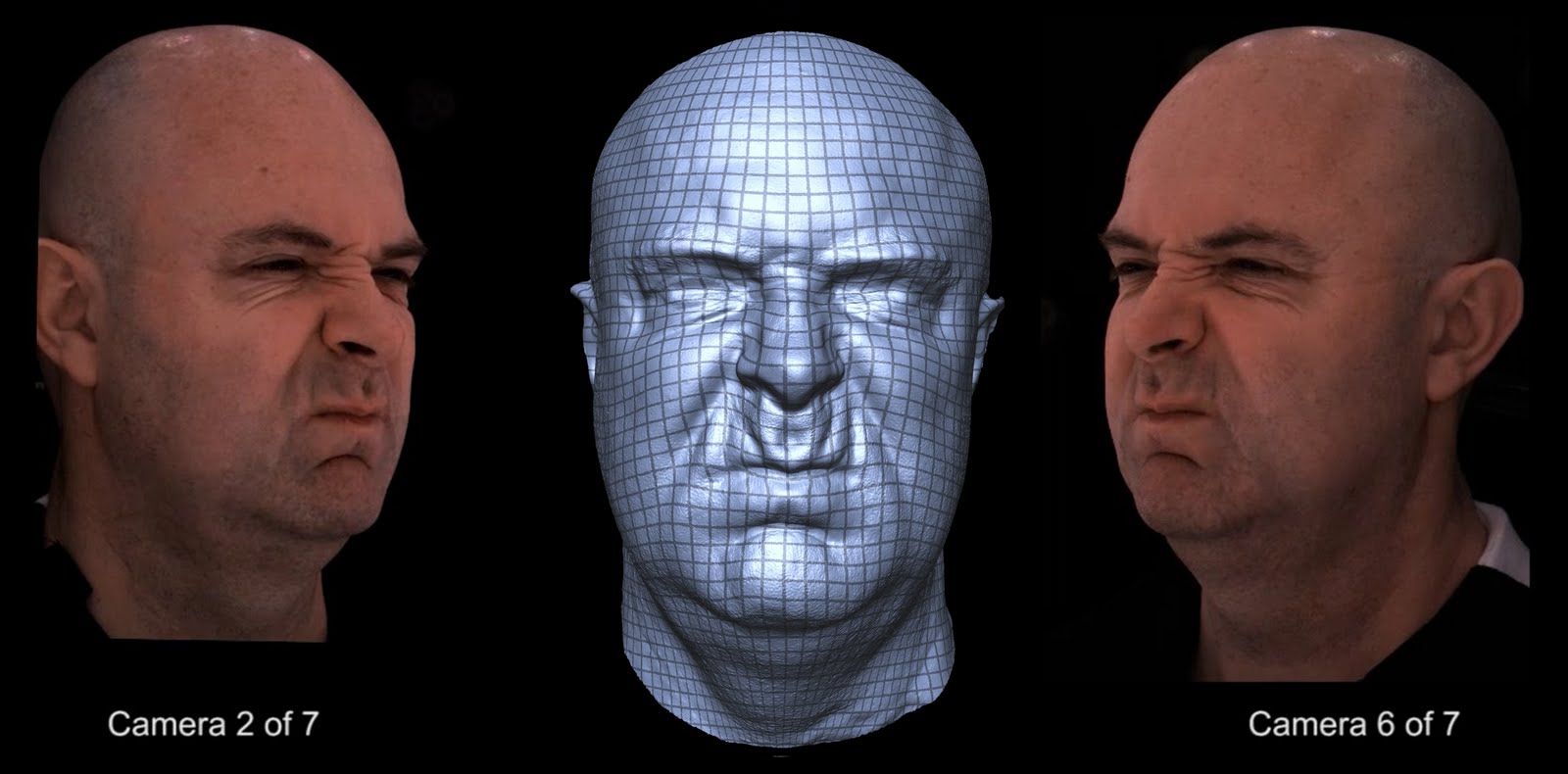
A new technique for high-quality facial performance capture that leverages the repetitive structure of face motions to automatically locate frames with similar expressions, called anchor frames. High-resolution geometry is reconstructed and temporal motion is propagated in parallel using robust image-space matching between the anchor frames.

Authors: Thabo Beeler, ETH Zürich and Disney Research Zürich; Fabian Hahn, Disney Research Zürich; Derek Bradley, Disney Research Zürich; Bernd Bickel, Disney Research Zürich; Paul Beardsley, Disney Research Zürich; Craig Gotsman, Technion-Israel Institute of Technology; Bob Sumner, Disney Research Zürich; Markus Gross, Disney Research Zürich


Practical application as suggested by the Technical Papers Chair: Highly detailed facial capture using multiple cameras without markers.

Bounded Biharmonic Weights for Real-Time Deformation

Deformation by linear blending dominates practical use as the fastest approach for transforming 2D and 3D shapes. This paper develops "bounded biharmonic weights" that produce smooth and intuitive deformations for any combination of points, bones, and cages of arbitrary topology, making control of deformations simple and flexible.

Authors: Alec Jacobson, New York University; Jovan Popović, Adobe Systems Incorporated; Ilya Baran, Disney Research Zürich; Olga Sorkine, New York University

Practical application as suggested by the Technical Papers Chair: An elegant UI framework that unifies cages, skeletons, and point constraints for 2D and 3D deformations.

Tomographic Image Generation for Attenuation-Based Light Field and High-Dynamic-Range Displays

This method optimizes auto-multiscopic displays composed of compact volumes of light-attenuating material. Inexpensively fabricated by stacking transparencies, the attenuators recreate a light field when illuminated by a backlight. Tomographic optimization resolves inconsistencies between views, leading to brighter, higher-resolution 3D displays with extended depth of field and improved dynamic range.

Authors: Gordon Wetzstein, The University of British Columbia; Douglas Lanman, MIT Media Lab; Wolfgang Heidrich, The University of British Columbia; Ramesh Raskar, MIT Media Lab

Practical application as suggested by the Technical Papers Chair: Exploring displays with more than two depth layers.

A Temporally Quantized Diffusion Model for Rendering Translucent Materials

This new model for subsurface scattering remains accurate for high absorption, supports high-frequency illumination, and can handle very thin materials. It is efficient to evaluate and works well in production.

Authors: Eugene d’Eon, Weta Digital Ltd; Geoffrey Irving, Weta Digital Ltd

Practical application as suggested by the Technical Papers Chair: Amazingly realistic human skin.

Physics-Inspired Upsampling for Cloth Simulation in Games

With this method for learning linear upsampling operators in physically based cloth simulation, coarse meshes are enriched with mid-scale details in minimal time and memory budgets, as required in computer games.

Authors: Ladislav Kavan, Disney Interactive Studios; Daniel Gerszewski, University of Utah; Adam Bargteil, University of Utah; Peter-Pike Sloan, Disney Interactive Studios

Practical application as suggested by the Technical Papers Chair: A practical approach to enhancing cloth animation in real-time games.

Computational Stereo Camera System With Programmable Control Loop

This computational stereo camera system closes the control loop to handle traditionally difficult shots. It is completely programmable, so complex shots can easily be scripted and adjusted depending on the scene and artistic preferences.

Authors: Simon Heinzle, Disney Research Zürich; Pierre Greisen, Disney Research Zürich and ETH Zürich; David Gallup, University of North Carolina; Christine Chen, ETH Zürich; Daniel Saner, ETH Zürich; Aljoscha Smolic, Disney Research Zürich; Andreas Peter Burg, ETH Zürich; Wojciech Matusik, Disney Research Zürich; Markus Gross, ETH Zürich and Disney Research Zürich

Practical application as suggested by the Technical Papers Chair: Stereo camera that uses computer vision processing to help automate interaxial and convergence settings.

Real-Time Eulerian Water Simulation Using a Restricted Tall Cell Grid

A new real-time Eulerian fluid simulation that uses a hybrid grid of regular cubic cells on top of a layer of tall cells above an arbitrary terrain. The method includes a novel multigrid method and several fluid solver modifications, and achieves 30fps in real-world scenarios on a modern GPU.

Authors: Nuttapong Chentanez, NVIDIA Corporation; Matthias Muller, NVIDIA Corporation

Practical application as suggested by the Technical Papers Chair: Realistic fluids rendered in real time.


A complete listing of all the papers presented in this year’s program will be available on the SIGGRAPH 2011 web site in late May. Check back here next week for an interesting interview with Hugues Hoppe.

23 March 2010

First Selection of SIGGRAPH 2010 Courses Available

In SIGGRAPH 2010 Courses, attendees learn from the experts in the field and gain inside knowledge that is critical to career advancement. Courses are short (1.75 hours) or half-day (3.5 hours) structured sessions that often include elements of interactive demonstration, performance, or other imaginative approaches to teaching.

The spectrum of Courses ranges from an introduction to the foundations of computer graphics and interactive techniques for those new to the field to advanced instruction on the most current techniques and topics. Courses include core curricula taught by invited instructors as well as Courses selected from juried proposals.

Click here for details.

The full list of SIGGRAPH 2010 Courses will be available in May.