
The 42nd International Conference and Exhibition on Computer Graphics and Interactive Techniques
Showing posts with label scientific visualization. Show all posts
Showing posts with label scientific visualization. Show all posts
16 June 2014
SIGGRAPH 2014 Releases Sneak Peek Emerging Technologies Video
The SIGGRAPH 2014 Emerging Technologies program showcases the latest interactive and graphics technologies before they transform the way we live and work. Emerging Technologies presents demonstrations of research from several fields, including displays, input devices, collaborative environments, gaming, computer vision, biometrics, wearable computing, scientific visualization, medicine, robotics, and design. Here's the new preview video to get you an early peek of the wonderful tech coming to Vancouver.


08 March 2014
Real-Time Live! Submission Deadline Approaching
Are you an Evil Genius? Mad Scientist? Creative Computer God?
If so, we want YOU!
The submission deadline for the Real-Time Live! program is fast approaching. Submit your work by Tuesday, 1 April, 22:00 UTC/GMT, for consideration to present at SIGGRAPH 2014!
Real-Time Live! remains the premier showcase for the most innovative and interactive real-time graphics created in the last 12 months, packaged into a diverse and fast-paced show.
We are seeking the latest examples of real-time graphics, interactions and simulations, including:
- Computer games
- Real-time art explorations
- Research projects
- Military or industrial simulations
- Interactive animation and graphics
- Scientific visualizations: medical, astrophysics, astronomy
- Interactive data visualizations and information graphics
- Armies of autonomous penguin drones with shrink-ray bowties
This year, the show will be an extravaganza with a mad science noir, fun-filled fanfare, and prizes!
What are you waiting for?
Submit your work today!We are looking forward to all of your submissions. Please contact the Real-Time Live! Chair if you have any questions about presentation opportunities at SIGGRAPH 2014.
25 July 2013
31 May 2012
Q&A with the 2012 Technical Papers Chair Hanspeter Pfister from Harvard

His research lies at the intersection of visualization, computer graphics, and computer vision. He received his PhD in computer science in 1996 from the State University of New York at Stony Brook and his MS in Electrical Engineering from the Swiss Federal Institute of Technology in Zurich, Switzerland, in 1991.
Briefly describe your past experiences as a SIGGRAPH volunteer:
I attended my first SIGGRAPH in Chicago in 1992 and got hooked immediately. From 1994 to 1996, I was a student volunteer, hanging out mostly at the International Center and occasionally crimping ethernet cables -- great times! In 2001, I was invited to join the SIGGRAPH Technical Papers Committee for the first time. In 2005, I was jury member of the Sketches program, which I chaired in 2006. And I've been a member of the Papers, Courses, and Sketches Committees for SIGGRAPH and SIGGRAPH Asia numerous times.
What motivated you to serve as this year's Technical Papers Chair?
It is a huge honor to be asked to become Technical Papers Chair, so when Rob Cook -- chair of the Papers Advisory Group -- asked me, I immediately said yes. The main motivation was to give back to the community that has been a big part of my career for many years. And I was looking forward to being a part of (and shaping) the process that selects the highest quality papers for acceptance at SIGGRAPH.
How exactly is the Jury selected?
Selecting the Technical Papers Committee is the most important thing a Technical Papers Chair does. The first step was to select the Papers Advisory Board, which consisted of Marc Alexa (SIGGRAPH 2013 Chair), Kavita Bala (SIGGRAPH ASIA 2011 Chair), Fredo Durand, Hugues Hoppe (SIGGRAPH 2011 Chair), Holly Rushmeier, and Peter-Pike Sloan (SIGGRAPH ASIA 2012 Chair). They were a tremendous help throughout the process and helped me to select the committee. We had to identify the experts in various communities, balance the areas in which we anticipated submission, find the right mix between experience and fresh blood, and consider term limits to make sure that new members join us each year. It was a daunting, but very exciting task.
How did the Jury process go this year?
Besides a server crash on submission day, it went exceedingly well. The 53 members of the Papers Committee did a tremendous amount of work, as did the hundreds of external reviewers. I had a lot of support from my assistant Angela Anderson from Talley Management, and a host of other people who helped to run the process smoothly and professionally. Overall we accepted 94 papers out of 449 submissions for an acceptance rate of 21%, and referred another 9 papers to the ACM Transactions on Graphics.
Did you notice any trends in the submissions?
In addition to traditional areas such as rendering, surface modeling, image and video processing, fluid simulation, and character animation, we accepted papers in emerging areas such as 3D fabrication, light field displays, real-time sound synthesis, and tactile feedback devices. I am especially excited about papers that stretch the definition of graphics because they help evolve our field and make SIGGRAPH vibrant and exciting.
Did the content for S2012 meet your expectations?
Seeing the huge number of submissions and considering how much work went into them is humbling. I am deeply thankful to all the authors who sent their work to SIGGRAPH 2012, and to all the reviewers and committee members for selecting the best papers this year in computer graphics and interactive techniques. We ended up with a terrific and exciting program with outstanding papers in all of the technical areas.
How can the Technical Papers program make certain that it remains relevant for years to come?
Looking at the creativity and ingenuity of the submissions this year I am not worried about the future. And the great thing about SIGGRAPH is that it is able to reinvent itself. As long as we continue to evolve the definition of computer graphics and interactive techniques and allow for new and fresh ideas to be published we will remain relevant. And I have no doubts that visual and interactive techniques will continue to play a huge role in our everyday lives.
What is your advice to someone considering submitting a future SIGGRAPH technical paper?
Read the FAQ on our web site! Many of the questions I received have been answered there, and the process is described in great detail. And then of course produce some outstanding work that is inspiring, significant, and maybe unexpected. Then spend the effort and time to write a good paper about it. The quality of the writing really matters, and I would suggest you look carefully at some of the great papers from previous years. It does take effort, but I can assure you that every paper is treated with respect and will receive thoughtful, helpful reviews.
Briefly describe one of your more intriguing ongoing projects at Harvard:
I am very excited to work with my neuroscience collaborators at the Harvard Center for Brain Science on reconstructing the detailed neural circuitry of the brain, one of the grand challenges of this century. We are dealing with tera- and soon petabytes of image data from electron microscopy and are working on fully-automated reconstruction techniques that are scalable and efficient. The challenges are tremendous in all areas of computer vision, visualization, graphics systems, and network analysis -- I am having a blast.
What were some of the key things you took away from your 11 years at Mitsubishi Electric Research Laboratories (MERL)?
Work with people who are smarter than you -- at MERL I had the privilege to be surrounded by some of the best researchers and work with some of the best students around the world. Work on practical problems to drive technical innovation -- the other way around is a lot harder. And of course my boss and mentor, Joe Marks, taught me to delegate, delegate, delegate -- a skill that serves me well as a faculty member.
Would you recommend a career in computer science to your daughters and how did you pick their names?
My daughters Lilly (9) and Audrey (6) already monopolize the family iPad and laptop with their games and e-books. They are learning at an early age what makes computers so exciting: the ability to create and simulate anything. I am sure that they will pick up computer science skills in whatever career they choose.
As for how we picked their names: We like old fashioned names and wanted to make sure their names are somewhat unique, so we checked their popularity on Martin Wattenberg's fabulous Baby Name Wizard visualization. Of course the irony is that both names had a huge uptick in popularity since then. I guess we were trend setters.
21 May 2012
SIGGRAPH 2012 Technical Papers Preview
The SIGGRAPH 2012 Technical Papers program is the premier international forum for disseminating new scholarly work in computer graphics and interactive techniques. The 39th International Conference and Exhibition on Computer Graphics and Interactive Techniques, 5–9 August 2012 at the Los Angeles Convention Center, features Technical Papers that detail new advances across many fronts, including 3D display technology, photographic prints for HDR images, textile design, and more.
“This year’s program features papers that propel the field forward as rapidly and vibrantly as possible, while at the same time keeping us well-grounded academically, ensuring that SIGGRAPH remains a breeding ground for significant new areas of research,” said Hanspeter Pfister, SIGGRAPH 2012 Technical Papers Chair from Harvard University.
The papers to be presented were chosen by a distinguished committee of academia and industry experts. Out of 449 submissions, 94 papers were accepted to SIGGRAPH 2012, representing an acceptance rate of 21 percent.
This year’s Technical Papers program also includes conference presentations for 38 papers published this year in the journal ACM Transactions on Graphics (TOG). A complete listing of all selected Technical Papers will be available on the SIGGRAPH 2012 web site in late May.
Highlights from the SIGGRAPH 2012 Technical Papers program:

This paper presents a new display technology for glasses-free stereo viewing. Combining multiple layers of LCD, directional back-lighting, temporal modulation, and a new mathematical formulation allows for greater depths of field, wider fields of view, and a thinner display.
Practical application as suggested by the Technical Papers Chair: Glasses-free stereo display.

When traditional photographs are printed, the range of brightness can be heavily compressed, and the result can look flat. This paper presents a solution for viewing HDR images using a reflective sheet of paper, glossy ink, and a torch light illuminating the paper. With the proposed technique, one can get a better sense of the range of brightness in the scene and adjust it by moving the light or the paper.
Practical application as suggested by the Technical Papers Chair: Printing high-dynamic-range images, keeping brightness fidelity.

3D scans of real fabrics to design new 3D fabrics for rendering. The fabrics are rendered in a physically based way, which allows textile designers to predict how a given weave pattern would look if it were fabricated, resulting in highly realistic results for textile design, ecommerce, entertainment, and apparel visualization.
Practical application as suggested by the Technical Papers Chair: Designing real fabrics by predicting their appearance.

Colliding objects produce impact sounds, usually described by modal synthesis. This paper introduces the effect of acceleration in this model, thus allowing for rendering more realistic, crisper collision sounds, or making a sound audible when the modal component only would be inaudible by humans.

Finding architectural shapes that are self-supporting is a major challenge in masonry. Discrete differential geometry allows the authors to propose a non-linear optimization process approximating a given surface by a self-supporting one. They also produce a quad mesh with planar faces guiding steel/glass constructions.
Practical application as suggested by the Technical Papers Chair: A tool for architects to design constructions that have not been seen before.

Using an Eulerian formulation and signal-processing principles, the authors amplify subtle changes in videos that could not be perceived otherwise.
Practical application as suggested by the Technical Papers Chair: Easier monitoring of adult and infant patients.

Cross-section curves are often used by artists to depict man-made objects. This paper exploits perceptual principles to derive a framework for shading these sketches, reconstructing appropriate normals and rendering them in a 3D-like fashion.
Practical application as suggested by the Technical Papers Chair: 3D-like rendering of sketches for improved surface depiction.
What Makes Paris Look Like Paris?
Authors: Carl Doersch, Saurabh Singh, and Abhinav Gupta, Carnegie Mellon University; Josef Sivic, INRIA/ Ecole Normale Sup´erieure, Paris; Alexei A. Efros, Carnegie Mellon University, INRIA/Ecole Normale Sup´erieure, Paris

Particular features (such as windows, lamps, trees) in photographs indicate where the images were captured. Using machine learning techniques and large collections of geotagged images, this technology extracts such elements from photographs and guesses where they were taken.
Practical application as suggested by the Technical Papers Chair: Automatic geolocalization of photographs.
“This year’s program features papers that propel the field forward as rapidly and vibrantly as possible, while at the same time keeping us well-grounded academically, ensuring that SIGGRAPH remains a breeding ground for significant new areas of research,” said Hanspeter Pfister, SIGGRAPH 2012 Technical Papers Chair from Harvard University.
The papers to be presented were chosen by a distinguished committee of academia and industry experts. Out of 449 submissions, 94 papers were accepted to SIGGRAPH 2012, representing an acceptance rate of 21 percent.
This year’s Technical Papers program also includes conference presentations for 38 papers published this year in the journal ACM Transactions on Graphics (TOG). A complete listing of all selected Technical Papers will be available on the SIGGRAPH 2012 web site in late May.
Highlights from the SIGGRAPH 2012 Technical Papers program:
Tensor Displays: Compressive Light Field Synthesis Using Multilayer Displays with Directional Backlighting
Authors: Gordon Wetzstein, Douglas Lanman, Matthew Hirsch, and Ramesh Raskar, MIT Media LabThis paper presents a new display technology for glasses-free stereo viewing. Combining multiple layers of LCD, directional back-lighting, temporal modulation, and a new mathematical formulation allows for greater depths of field, wider fields of view, and a thinner display.
Practical application as suggested by the Technical Papers Chair: Glasses-free stereo display.
Printing Spatially-Varying Reflectance for Reproducing HDR Images
Authors: Yue Dong, Microsoft Research Asia; Xin Tong, Microsoft Research Asia; Fabio Pellacini, Dartmouth College and Sapienza University of Rome; and Baining Guo, Microsoft Research Asia
When traditional photographs are printed, the range of brightness can be heavily compressed, and the result can look flat. This paper presents a solution for viewing HDR images using a reflective sheet of paper, glossy ink, and a torch light illuminating the paper. With the proposed technique, one can get a better sense of the range of brightness in the scene and adjust it by moving the light or the paper.
Practical application as suggested by the Technical Papers Chair: Printing high-dynamic-range images, keeping brightness fidelity.
Structure-Aware Synthesis for Predictive Woven Fabric Appearance
Authors: Shuang Zhao, Wenzel Jakob, Steve Marschner, and Kavita Bala, Cornell University3D scans of real fabrics to design new 3D fabrics for rendering. The fabrics are rendered in a physically based way, which allows textile designers to predict how a given weave pattern would look if it were fabricated, resulting in highly realistic results for textile design, ecommerce, entertainment, and apparel visualization.
Practical application as suggested by the Technical Papers Chair: Designing real fabrics by predicting their appearance.
Precomputed Acceleration Noise for Improved Rigid-Body Sound
Authors: Jeffrey N. Chadwick, Changxi Zheng, and Doug L. James, Cornell UniversityColliding objects produce impact sounds, usually described by modal synthesis. This paper introduces the effect of acceleration in this model, thus allowing for rendering more realistic, crisper collision sounds, or making a sound audible when the modal component only would be inaudible by humans.
Practical application as suggested by the Technical Papers Chair: Improving collision-sound realism in virtual environments.
Design of Self-Supporting Surfaces
Authors: Etienne Vouga, Columbia University/King Abdullah University of Science and Technology; Mathias Höbinger, Evolute/TU Wien, Johannes Wallner, TU Graz/TU Wien; Helmut Pottmann, King Abdullah University of Science and Technology Finding architectural shapes that are self-supporting is a major challenge in masonry. Discrete differential geometry allows the authors to propose a non-linear optimization process approximating a given surface by a self-supporting one. They also produce a quad mesh with planar faces guiding steel/glass constructions.
Practical application as suggested by the Technical Papers Chair: A tool for architects to design constructions that have not been seen before.
Eulerian Video Magnification for Revealing Subtle Changes in the World
Authors: Hao-Yu Wu, Michael Rubinstein, Massachusetts Institute of Technology CSAIL; Eugene Shih, Quanta Research Cambridge, Inc.; Frédo Durand, William Freeman, Massachusetts Institute of Technology, CSAIL, Using an Eulerian formulation and signal-processing principles, the authors amplify subtle changes in videos that could not be perceived otherwise.
Practical application as suggested by the Technical Papers Chair: Easier monitoring of adult and infant patients.
CrossShade: Shading Concept Sketches Using Cross-Section Curves
Authors: Cloud Shao, University of Toronto; Adrien Bousseau, REVES - INRIA Sophia Antipolis; Alla Sheffer, The University of British Columbia; Karan Singh, University of TorontoCross-section curves are often used by artists to depict man-made objects. This paper exploits perceptual principles to derive a framework for shading these sketches, reconstructing appropriate normals and rendering them in a 3D-like fashion.
Practical application as suggested by the Technical Papers Chair: 3D-like rendering of sketches for improved surface depiction.
What Makes Paris Look Like Paris?
Authors: Carl Doersch, Saurabh Singh, and Abhinav Gupta, Carnegie Mellon University; Josef Sivic, INRIA/ Ecole Normale Sup´erieure, Paris; Alexei A. Efros, Carnegie Mellon University, INRIA/Ecole Normale Sup´erieure, Paris

Particular features (such as windows, lamps, trees) in photographs indicate where the images were captured. Using machine learning techniques and large collections of geotagged images, this technology extracts such elements from photographs and guesses where they were taken.
Practical application as suggested by the Technical Papers Chair: Automatic geolocalization of photographs.
29 April 2011
SIGGRAPH 2011 Technical Papers Advance Preview
The SIGGRAPH Technical Papers program is the premier international forum for disseminating new scholarly work in computer graphics and interactive techniques. SIGGRAPH 2011, 7 –11 August 2011 at the Vancouver Convention Centre, will feature 82 Technical Papers, selected from among 432 submissions.
The papers to be presented were chosen by a distinguished committee of 52 experts from academia and industry. This year’s Technical Papers program also includes conference presentations for 33 papers published this year in the journal ACM Transactions on Graphics (TOG).
“Each yea r, the SIGGRAPH Technical Papers program evolves to feature the most cutting-edge advances in technology," says Hugues Hoppe, SIGGRAPH 2011 Technical Papers Chair from Microsoft Research. “This year is no different as SIGGRAPH 2011 Technical Papers will provide a look into some of the latest achievements in facial animation, stereo and multi-layered displays, procedural modeling, and rendering.”
In addition to core topics of modeling, animation, rendering, imaging, and human-computer interaction, the Technical Papers program encouraged submissions from areas related to computer graphics, including: computer games, design, vision, scientific and information visualization, audio, and robotics.
Featured highlights from the SIGGRAPH 2011 Technical Papers program:
High-Quality Passive Facial Performance Capture Using Anchor Frames
A new techniqu e for high-quality facial performance capture that leverages the repetitive structure of face motions to automatically locate frames with similar expressions, called anchor frames. High-resolution geometry is reconstructed and temporal motion is propagated in parallel using robust image-space matching between the anchor frames.
Authors: Thabo Beeler, ETH Zürich and Disney Research Zürich; Fabian Hahn, Disney Research Zürich; Derek Bradley, Disney Research Zürich; Bernd Bickel, Disney Research Zürich; Paul Beardsley, Disney Research Zürich; Craig Gotsman, Technion-Israel Institute of Technology; Bob Sumner, Disney Research Zürich; Markus Gross, Disney Research Zürich
Practical application as suggested by the Technical Papers Chair: Highly detailed facial capture using multiple cameras without markers.
Bounded Biharmonic Weights for Real-Time Deformation
Deformation by linear blending dominates practical use as the fastest approach for transforming 2D and 3D shapes. This paper develops "bounded biharmonic weights" that produce smooth and intuitive deformations for any combination of points, bones, and cages of arbitrary topology, making control of deformations simple and flexible.
Authors: Alec Jacobson, New York University; Jovan Popović, Adobe Systems Incorporated; Ilya Baran, Disney Research Zürich; Olga Sorkine, New York University
Practical application as suggested by the Technical Papers Chair: An elegant UI framework that unifies cages, skeletons, and point constraints for 2D and 3D deformations.
Tomographic Image Generation for Attenuation-Based Light Field and High-Dynamic-Range Displays
This method optimizes auto-multiscopic displays composed of compact volumes of light-attenuating material. Inexpensively fabricated by stacking transparencies, the attenuators recreate a light field when illuminated by a backlight. Tomographic optimization resolves inconsistencies between views, leading to brighter, higher-resolution 3D displays with extended depth of field and improved dynamic range.
Authors: Gordon Wetzstein, The University of British Columbia; Douglas Lanman, MIT Media Lab; Wolfgang Heidrich, The University of British Columbia; Ramesh Raskar, MIT Media Lab
Practical application as suggested by the Technical Papers Chair: Exploring displays with more than two depth layers.
A Temporally Quantized Diffusion Model for Rendering Translucent Materials
This new model for subsurface scattering remains accurate for high absorption, supports high-frequency illumination, and can handle very thin materials. It is efficient to evaluate and works well in production.
Authors: Eugene d’Eon, Weta Digital Ltd; Geoffrey Irving, Weta Digital Ltd
Practical application as suggested by the Technical Papers Chair: Amazingly realistic human skin.
Physics-Inspired Upsampling for Cloth Simulation in Games
With this method for learning linear upsampling operators in physically based cloth simulation, coarse meshes are enriched with mid-scale details in minimal time and memory budgets, as required in computer games.
Authors: Ladislav Kavan, Disney Interactive Studios; Daniel Gerszewski, University of Utah; Adam Bargteil, University of Utah; Peter-Pike Sloan, Disney Interactive Studios
Practical application as suggested by the Technical Papers Chair: A practical approach to enhancing cloth animation in real-time games.
Computational Stereo Camera System With Programmable Control Loop
This computational stereo camera system closes the control loop to handle traditionally difficult shots. It is completely programmable, so complex shots can easily be scripted and adjusted depending on the scene and artistic preferences.
Authors: Simon Heinzle, Disney Research Zürich; Pierre Greisen, Disney Research Zürich and ETH Zürich; David Gallup, University of North Carolina; Christine Chen, ETH Zürich; Daniel Saner, ETH Zürich; Aljoscha Smolic, Disney Research Zürich; Andreas Peter Burg, ETH Zürich; Wojciech Matusik, Disney Research Zürich; Markus Gross, ETH Zürich and Disney Research Zürich
Practical application as suggested by the Technical Papers Chair: Stereo camera that uses computer vision processing to help automate interaxial and convergence settings.
Real-Time Eulerian Water Simulation Using a Restricted Tall Cell Grid
A new real-time Eulerian fluid simulation that uses a hybrid grid of regular cubic cells on top of a layer of tall cells above an arbitrary terrain. The method includes a novel multigrid method and several fluid solver modifications, and achieves 30fps in real-world scenarios on a modern GPU.
Authors: Nuttapong Chentanez, NVIDIA Corporation; Matthias Muller, NVIDIA Corporation
Practical application as suggested by the Technical Papers Chair: Realistic fluids rendered in real time.
A complete listing of all the papers presented in this year’s program will be available on the SIGGRAPH 2011 web site in late May. Check back here next week for an interesting interview with Hugues Hoppe.
The papers to be presented were chosen by a distinguished committee of 52 experts from academia and industry. This year’s Technical Papers program also includes conference presentations for 33 papers published this year in the journal ACM Transactions on Graphics (TOG).
“Each yea
 r, the SIGGRAPH Technical Papers program evolves to feature the most cutting-edge advances in technology," says Hugues Hoppe, SIGGRAPH 2011 Technical Papers Chair from Microsoft Research. “This year is no different as SIGGRAPH 2011 Technical Papers will provide a look into some of the latest achievements in facial animation, stereo and multi-layered displays, procedural modeling, and rendering.”
In addition to core topics of modeling, animation, rendering, imaging, and human-computer interaction, the Technical Papers program encouraged submissions from areas related to computer graphics, including: computer games, design, vision, scientific and information visualization, audio, and robotics.
Featured highlights from the SIGGRAPH 2011 Technical Papers program:

High-Quality Passive Facial Performance Capture Using Anchor Frames
A new techniqu
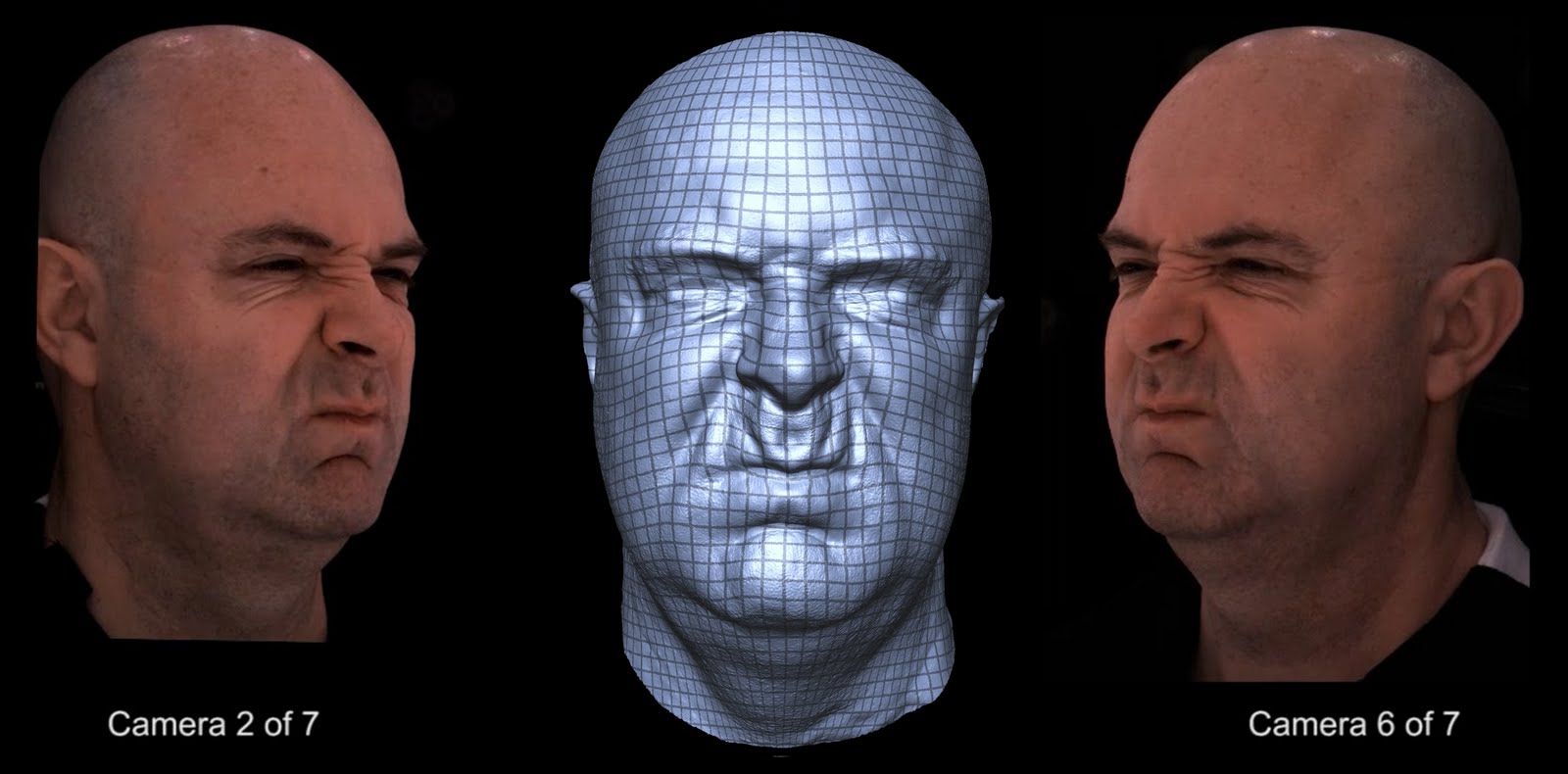 e for high-quality facial performance capture that leverages the repetitive structure of face motions to automatically locate frames with similar expressions, called anchor frames. High-resolution geometry is reconstructed and temporal motion is propagated in parallel using robust image-space matching between the anchor frames.
Authors: Thabo Beeler, ETH Zürich and Disney Research Zürich; Fabian Hahn, Disney Research Zürich; Derek Bradley, Disney Research Zürich; Bernd Bickel, Disney Research Zürich; Paul Beardsley, Disney Research Zürich; Craig Gotsman, Technion-Israel Institute of Technology; Bob Sumner, Disney Research Zürich; Markus Gross, Disney Research Zürich
Practical application as suggested by the Technical Papers Chair: Highly detailed facial capture using multiple cameras without markers.
Bounded Biharmonic Weights for Real-Time Deformation
Deformation by linear blending dominates practical use as the fastest approach for transforming 2D and 3D shapes. This paper develops "bounded biharmonic weights" that produce smooth and intuitive deformations for any combination of points, bones, and cages of arbitrary topology, making control of deformations simple and flexible.
Authors: Alec Jacobson, New York University; Jovan Popović, Adobe Systems Incorporated; Ilya Baran, Disney Research Zürich; Olga Sorkine, New York University
Practical application as suggested by the Technical Papers Chair: An elegant UI framework that unifies cages, skeletons, and point constraints for 2D and 3D deformations.
Tomographic Image Generation for Attenuation-Based Light Field and High-Dynamic-Range Displays
This method optimizes auto-multiscopic displays composed of compact volumes of light-attenuating material. Inexpensively fabricated by stacking transparencies, the attenuators recreate a light field when illuminated by a backlight. Tomographic optimization resolves inconsistencies between views, leading to brighter, higher-resolution 3D displays with extended depth of field and improved dynamic range.
Authors: Gordon Wetzstein, The University of British Columbia; Douglas Lanman, MIT Media Lab; Wolfgang Heidrich, The University of British Columbia; Ramesh Raskar, MIT Media Lab
Practical application as suggested by the Technical Papers Chair: Exploring displays with more than two depth layers.
A Temporally Quantized Diffusion Model for Rendering Translucent Materials
This new model for subsurface scattering remains accurate for high absorption, supports high-frequency illumination, and can handle very thin materials. It is efficient to evaluate and works well in production.
Authors: Eugene d’Eon, Weta Digital Ltd; Geoffrey Irving, Weta Digital Ltd
Practical application as suggested by the Technical Papers Chair: Amazingly realistic human skin.
Physics-Inspired Upsampling for Cloth Simulation in Games
With this method for learning linear upsampling operators in physically based cloth simulation, coarse meshes are enriched with mid-scale details in minimal time and memory budgets, as required in computer games.
Authors: Ladislav Kavan, Disney Interactive Studios; Daniel Gerszewski, University of Utah; Adam Bargteil, University of Utah; Peter-Pike Sloan, Disney Interactive Studios
Practical application as suggested by the Technical Papers Chair: A practical approach to enhancing cloth animation in real-time games.
Computational Stereo Camera System With Programmable Control Loop
This computational stereo camera system closes the control loop to handle traditionally difficult shots. It is completely programmable, so complex shots can easily be scripted and adjusted depending on the scene and artistic preferences.
Authors: Simon Heinzle, Disney Research Zürich; Pierre Greisen, Disney Research Zürich and ETH Zürich; David Gallup, University of North Carolina; Christine Chen, ETH Zürich; Daniel Saner, ETH Zürich; Aljoscha Smolic, Disney Research Zürich; Andreas Peter Burg, ETH Zürich; Wojciech Matusik, Disney Research Zürich; Markus Gross, ETH Zürich and Disney Research Zürich
Practical application as suggested by the Technical Papers Chair: Stereo camera that uses computer vision processing to help automate interaxial and convergence settings.
Real-Time Eulerian Water Simulation Using a Restricted Tall Cell Grid
A new real-time Eulerian fluid simulation that uses a hybrid grid of regular cubic cells on top of a layer of tall cells above an arbitrary terrain. The method includes a novel multigrid method and several fluid solver modifications, and achieves 30fps in real-world scenarios on a modern GPU.
Authors: Nuttapong Chentanez, NVIDIA Corporation; Matthias Muller, NVIDIA Corporation
Practical application as suggested by the Technical Papers Chair: Realistic fluids rendered in real time.
A complete listing of all the papers presented in this year’s program will be available on the SIGGRAPH 2011 web site in late May. Check back here next week for an interesting interview with Hugues Hoppe.
Subscribe to:
Posts (Atom)