
The 42nd International Conference and Exhibition on Computer Graphics and Interactive Techniques
18 May 2011
SIGGRAPH 2011 Technical Papers Preview Video is Live
SIGGRAPH just released the 2011 Technical Papers preview video. To view the video on YouTube, click here. A preview video of the Art Gallery and Emerging Technologies will be available in the next week or two.


04 May 2011
New Content Unveiled at SIGGRAPH 2011 Demonstrates Optimal Furniture Arrangement
Presenters from UCLA and the Hong Kong University of Science and Technology will be unveiling a new program that will automatically design the most desirable layout for pieces in various rooms based on rules pre-defined, such as "couches should face the television for optimal viewing" or "furniture should allow doors to open inwards". They do this by extracting relationships and then running everything through various optimization steps. Different optimized final outcomes are possible.
The group has used the program to optimally design everything from a living room to a sewing factory to a Chinese restaurant. They creatively titled their paper "Make it Home: Automatic Optimiziation of Furniture Arrangement."
Here's an example for an ideal layout given the equipment and furniture located inside a sewing factory.
Before:

After:

Image Credit: UCLA and the Hong Kong University of Science and Technology.
29 April 2011
SIGGRAPH 2011 Technical Papers Advance Preview
The SIGGRAPH Technical Papers program is the premier international forum for disseminating new scholarly work in computer graphics and interactive techniques. SIGGRAPH 2011, 7 –11 August 2011 at the Vancouver Convention Centre, will feature 82 Technical Papers, selected from among 432 submissions.
The papers to be presented were chosen by a distinguished committee of 52 experts from academia and industry. This year’s Technical Papers program also includes conference presentations for 33 papers published this year in the journal ACM Transactions on Graphics (TOG).
“Each yea r, the SIGGRAPH Technical Papers program evolves to feature the most cutting-edge advances in technology," says Hugues Hoppe, SIGGRAPH 2011 Technical Papers Chair from Microsoft Research. “This year is no different as SIGGRAPH 2011 Technical Papers will provide a look into some of the latest achievements in facial animation, stereo and multi-layered displays, procedural modeling, and rendering.”
In addition to core topics of modeling, animation, rendering, imaging, and human-computer interaction, the Technical Papers program encouraged submissions from areas related to computer graphics, including: computer games, design, vision, scientific and information visualization, audio, and robotics.
Featured highlights from the SIGGRAPH 2011 Technical Papers program:
High-Quality Passive Facial Performance Capture Using Anchor Frames
A new techniqu e for high-quality facial performance capture that leverages the repetitive structure of face motions to automatically locate frames with similar expressions, called anchor frames. High-resolution geometry is reconstructed and temporal motion is propagated in parallel using robust image-space matching between the anchor frames.
Authors: Thabo Beeler, ETH Zürich and Disney Research Zürich; Fabian Hahn, Disney Research Zürich; Derek Bradley, Disney Research Zürich; Bernd Bickel, Disney Research Zürich; Paul Beardsley, Disney Research Zürich; Craig Gotsman, Technion-Israel Institute of Technology; Bob Sumner, Disney Research Zürich; Markus Gross, Disney Research Zürich
Practical application as suggested by the Technical Papers Chair: Highly detailed facial capture using multiple cameras without markers.
Bounded Biharmonic Weights for Real-Time Deformation
Deformation by linear blending dominates practical use as the fastest approach for transforming 2D and 3D shapes. This paper develops "bounded biharmonic weights" that produce smooth and intuitive deformations for any combination of points, bones, and cages of arbitrary topology, making control of deformations simple and flexible.
Authors: Alec Jacobson, New York University; Jovan Popović, Adobe Systems Incorporated; Ilya Baran, Disney Research Zürich; Olga Sorkine, New York University
Practical application as suggested by the Technical Papers Chair: An elegant UI framework that unifies cages, skeletons, and point constraints for 2D and 3D deformations.
Tomographic Image Generation for Attenuation-Based Light Field and High-Dynamic-Range Displays
This method optimizes auto-multiscopic displays composed of compact volumes of light-attenuating material. Inexpensively fabricated by stacking transparencies, the attenuators recreate a light field when illuminated by a backlight. Tomographic optimization resolves inconsistencies between views, leading to brighter, higher-resolution 3D displays with extended depth of field and improved dynamic range.
Authors: Gordon Wetzstein, The University of British Columbia; Douglas Lanman, MIT Media Lab; Wolfgang Heidrich, The University of British Columbia; Ramesh Raskar, MIT Media Lab
Practical application as suggested by the Technical Papers Chair: Exploring displays with more than two depth layers.
A Temporally Quantized Diffusion Model for Rendering Translucent Materials
This new model for subsurface scattering remains accurate for high absorption, supports high-frequency illumination, and can handle very thin materials. It is efficient to evaluate and works well in production.
Authors: Eugene d’Eon, Weta Digital Ltd; Geoffrey Irving, Weta Digital Ltd
Practical application as suggested by the Technical Papers Chair: Amazingly realistic human skin.
Physics-Inspired Upsampling for Cloth Simulation in Games
With this method for learning linear upsampling operators in physically based cloth simulation, coarse meshes are enriched with mid-scale details in minimal time and memory budgets, as required in computer games.
Authors: Ladislav Kavan, Disney Interactive Studios; Daniel Gerszewski, University of Utah; Adam Bargteil, University of Utah; Peter-Pike Sloan, Disney Interactive Studios
Practical application as suggested by the Technical Papers Chair: A practical approach to enhancing cloth animation in real-time games.
Computational Stereo Camera System With Programmable Control Loop
This computational stereo camera system closes the control loop to handle traditionally difficult shots. It is completely programmable, so complex shots can easily be scripted and adjusted depending on the scene and artistic preferences.
Authors: Simon Heinzle, Disney Research Zürich; Pierre Greisen, Disney Research Zürich and ETH Zürich; David Gallup, University of North Carolina; Christine Chen, ETH Zürich; Daniel Saner, ETH Zürich; Aljoscha Smolic, Disney Research Zürich; Andreas Peter Burg, ETH Zürich; Wojciech Matusik, Disney Research Zürich; Markus Gross, ETH Zürich and Disney Research Zürich
Practical application as suggested by the Technical Papers Chair: Stereo camera that uses computer vision processing to help automate interaxial and convergence settings.
Real-Time Eulerian Water Simulation Using a Restricted Tall Cell Grid
A new real-time Eulerian fluid simulation that uses a hybrid grid of regular cubic cells on top of a layer of tall cells above an arbitrary terrain. The method includes a novel multigrid method and several fluid solver modifications, and achieves 30fps in real-world scenarios on a modern GPU.
Authors: Nuttapong Chentanez, NVIDIA Corporation; Matthias Muller, NVIDIA Corporation
Practical application as suggested by the Technical Papers Chair: Realistic fluids rendered in real time.
A complete listing of all the papers presented in this year’s program will be available on the SIGGRAPH 2011 web site in late May. Check back here next week for an interesting interview with Hugues Hoppe.
The papers to be presented were chosen by a distinguished committee of 52 experts from academia and industry. This year’s Technical Papers program also includes conference presentations for 33 papers published this year in the journal ACM Transactions on Graphics (TOG).
“Each yea
 r, the SIGGRAPH Technical Papers program evolves to feature the most cutting-edge advances in technology," says Hugues Hoppe, SIGGRAPH 2011 Technical Papers Chair from Microsoft Research. “This year is no different as SIGGRAPH 2011 Technical Papers will provide a look into some of the latest achievements in facial animation, stereo and multi-layered displays, procedural modeling, and rendering.”
In addition to core topics of modeling, animation, rendering, imaging, and human-computer interaction, the Technical Papers program encouraged submissions from areas related to computer graphics, including: computer games, design, vision, scientific and information visualization, audio, and robotics.
Featured highlights from the SIGGRAPH 2011 Technical Papers program:

High-Quality Passive Facial Performance Capture Using Anchor Frames
A new techniqu
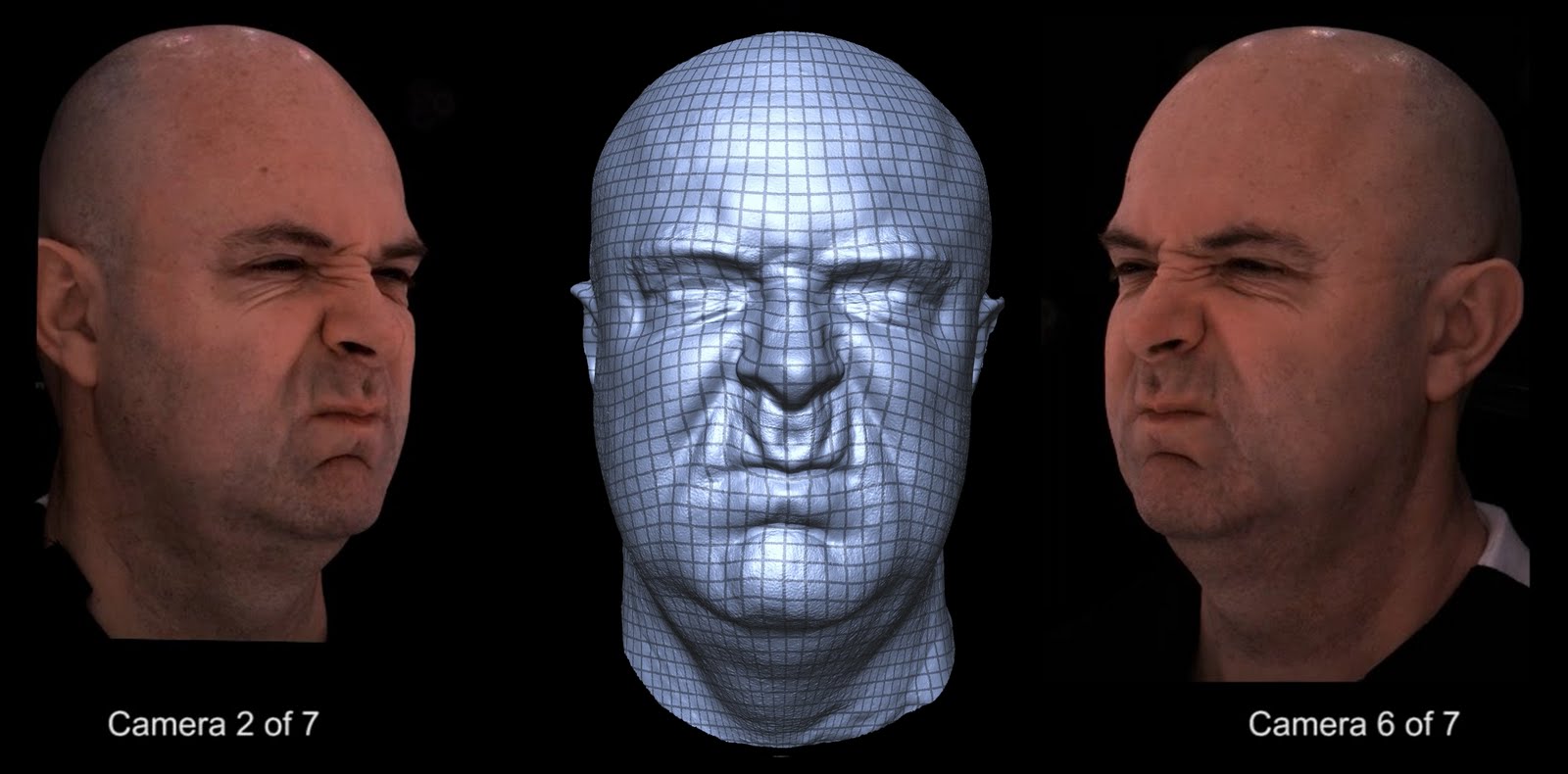 e for high-quality facial performance capture that leverages the repetitive structure of face motions to automatically locate frames with similar expressions, called anchor frames. High-resolution geometry is reconstructed and temporal motion is propagated in parallel using robust image-space matching between the anchor frames.
Authors: Thabo Beeler, ETH Zürich and Disney Research Zürich; Fabian Hahn, Disney Research Zürich; Derek Bradley, Disney Research Zürich; Bernd Bickel, Disney Research Zürich; Paul Beardsley, Disney Research Zürich; Craig Gotsman, Technion-Israel Institute of Technology; Bob Sumner, Disney Research Zürich; Markus Gross, Disney Research Zürich
Practical application as suggested by the Technical Papers Chair: Highly detailed facial capture using multiple cameras without markers.
Bounded Biharmonic Weights for Real-Time Deformation
Deformation by linear blending dominates practical use as the fastest approach for transforming 2D and 3D shapes. This paper develops "bounded biharmonic weights" that produce smooth and intuitive deformations for any combination of points, bones, and cages of arbitrary topology, making control of deformations simple and flexible.
Authors: Alec Jacobson, New York University; Jovan Popović, Adobe Systems Incorporated; Ilya Baran, Disney Research Zürich; Olga Sorkine, New York University
Practical application as suggested by the Technical Papers Chair: An elegant UI framework that unifies cages, skeletons, and point constraints for 2D and 3D deformations.
Tomographic Image Generation for Attenuation-Based Light Field and High-Dynamic-Range Displays
This method optimizes auto-multiscopic displays composed of compact volumes of light-attenuating material. Inexpensively fabricated by stacking transparencies, the attenuators recreate a light field when illuminated by a backlight. Tomographic optimization resolves inconsistencies between views, leading to brighter, higher-resolution 3D displays with extended depth of field and improved dynamic range.
Authors: Gordon Wetzstein, The University of British Columbia; Douglas Lanman, MIT Media Lab; Wolfgang Heidrich, The University of British Columbia; Ramesh Raskar, MIT Media Lab
Practical application as suggested by the Technical Papers Chair: Exploring displays with more than two depth layers.
A Temporally Quantized Diffusion Model for Rendering Translucent Materials
This new model for subsurface scattering remains accurate for high absorption, supports high-frequency illumination, and can handle very thin materials. It is efficient to evaluate and works well in production.
Authors: Eugene d’Eon, Weta Digital Ltd; Geoffrey Irving, Weta Digital Ltd
Practical application as suggested by the Technical Papers Chair: Amazingly realistic human skin.
Physics-Inspired Upsampling for Cloth Simulation in Games
With this method for learning linear upsampling operators in physically based cloth simulation, coarse meshes are enriched with mid-scale details in minimal time and memory budgets, as required in computer games.
Authors: Ladislav Kavan, Disney Interactive Studios; Daniel Gerszewski, University of Utah; Adam Bargteil, University of Utah; Peter-Pike Sloan, Disney Interactive Studios
Practical application as suggested by the Technical Papers Chair: A practical approach to enhancing cloth animation in real-time games.
Computational Stereo Camera System With Programmable Control Loop
This computational stereo camera system closes the control loop to handle traditionally difficult shots. It is completely programmable, so complex shots can easily be scripted and adjusted depending on the scene and artistic preferences.
Authors: Simon Heinzle, Disney Research Zürich; Pierre Greisen, Disney Research Zürich and ETH Zürich; David Gallup, University of North Carolina; Christine Chen, ETH Zürich; Daniel Saner, ETH Zürich; Aljoscha Smolic, Disney Research Zürich; Andreas Peter Burg, ETH Zürich; Wojciech Matusik, Disney Research Zürich; Markus Gross, ETH Zürich and Disney Research Zürich
Practical application as suggested by the Technical Papers Chair: Stereo camera that uses computer vision processing to help automate interaxial and convergence settings.
Real-Time Eulerian Water Simulation Using a Restricted Tall Cell Grid
A new real-time Eulerian fluid simulation that uses a hybrid grid of regular cubic cells on top of a layer of tall cells above an arbitrary terrain. The method includes a novel multigrid method and several fluid solver modifications, and achieves 30fps in real-world scenarios on a modern GPU.
Authors: Nuttapong Chentanez, NVIDIA Corporation; Matthias Muller, NVIDIA Corporation
Practical application as suggested by the Technical Papers Chair: Realistic fluids rendered in real time.
A complete listing of all the papers presented in this year’s program will be available on the SIGGRAPH 2011 web site in late May. Check back here next week for an interesting interview with Hugues Hoppe.
26 April 2011
Interview with the 2011 SIGGRAPH Technical Papers Chair

Following below is a brief conversation with Hugues Hoppe, SIGGRAPH 2011 Technical Papers Chair from Microsoft Research, who shares his insights, opinions, and thoughts regarding SIGGRAPH 2011 and beyond.

What was your inspiration/motivation for volunteering to be the SIGGRAPH 2011 Technical Papers Chair?
Being the Technical Papers Chair is a once-in-a-lifetime chance to serve the research community and to experience the process from a completely different point of view, so this opportunity would have been difficult to pass up. Serving as chair entails many different responsibilities, but fortunately there is a large organization that provides help in numerous ways.
One of the most rewarding aspects is to try to improve the various stages of the Papers Program (submission, review, and presentation). Although this process has been fine-tuned over many years, one can still try to improve it. This year I worked toward increasing anonymity in the review process (so that it can hopefully become “double-blind” in the future), and worked with Stephen Spencer (SIGGRAPH Publications Director) to provide hyperlinks in PDF documents, as well as to introduce a “Papers fast-forward” document.
While SIGGRAPH has one of the most beautiful printed proceedings of any conference, the future lies in on-line electronic distribution, and we want to make that medium as rich and convenient as possible.
Did any trends surface as you reviewed all the submissions? Any surprises?
There are of course different “hot” topics every year, as our field continues to evolve. In addition to the traditional themes, some of the prominent ones this year include stereo acquisition and display, procedural and interactive geometry layout, and facial animation. Generally, we see a continuing trend towards data-rich approaches, as opposed to purely procedural ones. Personally I was impressed by the quality of real-time techniques in cloth animation and fluid simulation.
In comparison to last year, the acceptance rate was lower? Any reason for this?
I don’t think anyone knows precisely why the acceptance rate varies from year to year --- much like the stock market. There is much continuity in the papers committee members, and there is certainly no target number of accepted papers. Over the past five years, the acceptance rate has been 18%, 24%, 17%, 18%, and 27%. Thus, this year’s rate of 19% lies right in the middle of the long-term distribution.
How is this year’s program similar or different compared to previous years?
The program seems very similar to previous years in having the same balance of fresh/unexpected topics versus refinement of established areas.
What were some of the challenges that your committee faced in reviewing the content?
The review process seemed relatively uneventful this year. (I cannot reveal any of the issues encountered in the committee review discussions.) As usual, we had some Internet difficulties during the mad dash before the submission deadline. The lesson this year was to not advertise the precise time (about two hours before the deadline) at which we switch from uploading files to instead uploading MD5 hashes. Giving away the precise time effectively leads to a “denial-of-service attack” by our own users at that earlier time.
You have had many papers published since 1992, do any of them standout above the rest for particular reasons?
Two impactful papers are “Surface reconstruction from unorganized points” (1992) and “Progressive meshes” (1996). Surface reconstruction was a relatively new topic 20 years ago, and our results were really primitive, especially by today’s standards, so it’s great that SIGGRAPH recognized the potential this might have. The progressive meshes paper was also significant personally, as it was the first work on my own.
What advice would you give to someone who is considering submitting a paper to next year's SIGGRAPH?
Start work early! Really. Current SIGGRAPH papers have an amazing level of polish. That is likely why we see so few single-authored papers. The old timers in graphics recount stories of how they would have a great idea a few days before the submission deadline and quickly write it up; that is unfortunately not very feasible anymore.
If you had to name someone who has had the greatest impact on your professional life, who would that be and why?
Working with my PhD advisor Tony DeRose at the University of Washington was an invaluable experience. Overall, my time in graduate school was hugely productive. I’ve also had many supportive managers at Microsoft Research over the last 17 years.
We saw on your website that you have a preference for Belgium products, what is your connection to Belgium?
Indeed I was born in Belgium, and still speak some French. Although my family moved to the U.S. when I was young, I haven’t lost the taste for Belgian chocolates.
21 April 2011
SIGGRAPH 2011 Media Registration Now Open
SIGGRAPH is the best place in the world to experience the explosive evolution of computer graphics and interactive techniques. SIGGRAPH 2011 invites you to “Make it Home” with the best and brightest minds in computer graphics for the 38th International Conference and Exhibition on Computer Graphics and Interactive Techniques, 7 - 11 August 2011 in Vancouver.
Online media registration LINK is now open. In order to receive the latest breaking news from leading SIGGRAPH 2011 exhibitors, register by 8 July. Online registration will close 5 August.
Please note: Even if you have qualified for a SIGGRAPH media badge in the past, you must re-qualify for SIGGRAPH 2011. For assistance with your pre-show coverage, contact: media@siggraph.org.
SIGGRAPH 2011 Media Highlights include:
• Vancouver – The vibrant mix of urban and natural environment combined with its contagiously creative energy makes Vancouver the ideal host for SIGGRAPH 2011. With over one-third of it’s population active in SIGGRAPH’s major communities: artists, academics, film production, gaming, VFX, research, and more, this inspirational city welcomes the exploration and innovation this year’s conference brings.
• Technical Papers: The SIGGRAPH Technical Papers program is the premier international forum for disseminating new scholarly work in computer graphics and interactive techniques. SIGGRAPH 2011 Technical Papers will provide a look into some of the latest achievements in facial animation, procedural modeling, and rendering.
• Computer Animation Festival: The leading annual festival for the world's most innovative, accomplished, and amazing digital film and video creators. The Computer Animation Festival is recognized by the Academy of Motion Picture Arts and Sciences as a qualifying festival. Since 1999, several works originally presented in the Computer Animation Festival have been nominated for or have received a "Best Animated Short" Academy Award.
• Courses: SIGGRAPH 2011 courses provide attendees inside knowledge that is critical to career advancement presented by experts in the field. The spectrum of Courses ranges from an introduction to the foundations of computer graphics and interactive techniques for those new to the field to advanced instruction on the most current techniques and topics.
• Keeping you informed: Stay up to date on everything SIGGRAPH 2011 with our monthly conference newsletter SIGGRAPHitti, Facebook, and Twitter.
For complete details on all of the dynamic content available at SIGGRAPH 2011, or to register as media for the event, visit the For Media of the SIGGRAPH 2011 Web site.
22 March 2011
SIGGRAPH 2011 Exhibition Sales on Track to Meet or Exceed 2010 Results

SIGGRAPH has traditionally provided the year's largest, most comprehensive exhibition of products and services for the computer graphics and interactive techniques marketplace. If current sales trends continue, SIGGRAPH 2011 will be no different.
SIGGRAPH 2011, 7-11 August, at the Vancouver Convention Centre in Vancouver, Canada, is on pace or in some instances exceeding the exhibition sales data at this point last year for SIGGRAPH 2010 in Los Angeles. For instance, the current number of exhibitors participating and amount of booth space sold is higher this year than at this same point in time last year.
"Since this is the first time SIGGRAPH is being held in Canada, we are encouraged by the positive response of our exhibitors from North America and around the world," said Peter Braccio, SIGGRAPH 2011 Conference Chair from the Monterey Bay Aquarium Research Institute. "We are very encouraged by this vote of confidence from the exhibitor community. This year's submissions are even more encouraging. The volume and quality of papers, talks, courses, artwork, films, and interactive demos submitted so far confirm that this will be one of the most memorable SIGGRAPH conferences in years."
View more information on submitting work to be featured at SIGGRAPH 2011.
View more information on becoming a SIGGRAPH 2011 exhibitor.
View a detailed list of all SIGGRAPH 2011 Exhibitors.
07 March 2011
SIGGRAPH 2011 Selects Cory Doctorow as Keynote Speaker

SIGGRAPH announces the selection of Cory Doctorow, science fiction novelist, blogger, and technology activist, to give one of its keynote presentations at SIGGRAPH 2011, the 38th International Conference and Exhibition on Computer Graphics and Interactive Techniques, 7-11 August 2011 at the Vancouver Convention Centre in Vancouver, Canada.
Doctorow is a contributor to The Guardian, The New York Times, Publishers Weekly, and Wired, as well as co-editor of the popular blog Boing Boing. He was formerly director of European affairs for the Electronic Frontier Foundation, a non-profit civil liberties group that defends freedom in technology law, policy, standards, and treaties. He is a visiting senior lecturer at Open University (U.K.) and previously served as the Fulbright chair at the Annenberg Center for Public Diplomacy at the University of Southern California.
“As an author, scholar, future-thinker, and creator, Cory Doctorow brings a lot to the table that should be of immense interest to the SIGGRAPH audience,” said Peter Braccio, SIGGRAPH 2011 Conference Chair from the Monterey Bay Aquarium Research Institute. “His dynamic vision and creativity are certain to be interspersed throughout his presentation and will be a conference highlight for everyone.”
In 2008, Doctorow’s novel, Little Brother, was a New York Times best seller. Tachyon Books published a collection of his essays called Content: Selected Essays in Technology, Creativity, Copyright, and the Future of the Future and IDW published a collection of comic books inspired by his short fiction called Cory Doctorow’s Futuristic Tales of the Here and Now. Doctorow’s latest works include an adult novel, Maker, published by Tor Books/HarperCollins U.K.; For the Win, a young adult book about video games, labor politics, and economics; and a short story collection entitled Overclocked: Stories of the Future Present.
Doctorow has won the Locus and Sunburst Awards, and been nominated for the Hugo, Nebula, and British Science Fiction Awards. He co-founded the open source peer-to-peer software company OpenCola, sold to OpenText, Inc. in 2003. He serves on the boards of the Participatory Culture Foundation, the MetaBrainz Foundation, Technorati, Inc., the Organization for Transformative Works, Areae, the Annenberg Center for the Study of Online Communities, and Onion Networks, Inc.
SIGGRAPH keynote speakers represent a variety of prominent industry luminaries and technology experts who explore various aspects of computer graphics and interactive techniques.
Image Caption: Cory Doctorow, science fiction novelist, blogger, and technology activist.
Photo by Paula Mariel Salischiker, pausal.co.uk, CC-BY.
Subscribe to:
Posts (Atom)