20 February 2015

We've Moved


The SIGGRAPH Conference Media blog has moved to blog.siggraph.org. We’ve moved to a new format that allows us to include more of the SIGGRAPH story.  From conference updates to thought leadership pieces on computer graphics and interactive techniques,  we’ll be communicating with a broader audience, including conference attendees, SIGGRAPH members, chapters and subgroups, the media and others interested in the computer graphics and interactive techniques community.

We hope you’ll join the conversation at our new blog location.

13 February 2015

ACM SIGGRAPH Selects 2018 Conference Chair


ACM SIGGRAPH announced the selection of Roy C. Anthony, Research & Innovation with Christie, as the SIGGRAPH 2018 Conference Chair. Anthony, who chaired the Production Sessions at SIGGRAPH 2014 in Vancouver this past August, has been an active member and contributor to ACM SIGGRAPH for several years.

“SIGGRAPH 2018 is in capable hands,” said Rebecca Strzelec, SIGGRAPH Conference Advisory Group Chair. “Roy is more than an expert in his field; he is a superb leader with a clearly defined vision.”

Roy C. Anthony of Kitchener, Canada, is a technology innovator and subject matter expert in implementing fully collaborative, interactive immersive display solutions. Anthony’s focus ranges from the future of cinema to advances in new media platforms, such as fusing projection mapping with augmented and virtual reality. His research includes interactive virtual environment design for VR and Simulation, 3D stereoscopic displays, projection mapping, interactive real-time graphics and future technology for film and stage. He has worked at Fakespace Systems, Electrohome, and Dynamic Productions.

Anthony will also reprise his role as the SIGGRAPH Production Sessions Chair for SIGGRAPH 2015, which takes place 9-13 August in Los Angeles, California.

SIGGRAPH 2018 will take place once again in Vancouver, British Columbia, 12-16 August 2018. Given the enormous success of SIGGRAPH 2014, which hosted 14,045 artists, research scientists, gaming experts and developers, filmmakers, students, and academics from 50 U.S. states and 75 countries, Vancouver seems to be a welcome and obvious location choice.

Anthony will follow recently selected SIGGRAPH 2017 Conference Chair Jerome Solomon, Academic Dean at Cogswell College.

26 January 2015

Art Papers Chair Victoria Szabo Shares What Makes the Program and SIGGRAPH Special


SIGGRAPH 2015 Art Papers Chair Victoria Szabo explains the important role of artists and draws attention to what this unique program offers the community at large.

Reminder: Art Papers submissions are due 22:00 UTC/GMT, 27 January 2015.


What is your vision for SIGGRAPH 2015’s Art Papers program?

For 2015, the Art Papers focus is on “critical making,” which reflects the conference theme of Xroads of Discovery. We are especially interested in papers that reveal and exploit the unique affordances of emerging media forms through artistic practice. If Emerging Technology shows us what comes next technologically, Art Gallery demonstrates the creative use of those possibilities. And if the Studio offers the opportunity to explore new tools firsthand, then Art Papers document those innovations and guide us in our aesthetic and technical interpretations of digital art.

The process of critical reflection on computer-mediated artwork is relevant not only for artists, but for the whole community. Artists are often the first to see the social and cultural implications of new technologies, and can push the boundaries of technological development through their imaginative transformation of existing tools and techniques. They can also offer early warning systems for maladaptation.  This feedback loop between artists and technologists is one that SIGGRAPH nurtures.

How have you seen the Art Papers program develop in the last few years?


During the past seven years, the Art Papers program has developed into an important new venue for technically-informed conversations around media art making and critique. The SIGGRAPH community is distinctive for its combination of technical rigor and artistic excellence. Our partnership with Leonardo/ISAST for the print publication has reinforced our expectation that Art Papers speak to both the artistic and the scientific communities—and to help nurture the community of practice who consider themselves part of both worlds. Publication in our special issue of Leonardo is a professional coup for our writers, and we have continued to work to make media artists more aware of the opportunities SIGGRAPH and our Art community have to offer.

Art Papers authors are invited to join the Arts community in formal and informal gatherings.  Art Papers has also benefited from closer integration with the rest of the conference. Our papers are presented in regular conference sessions, which draw in a wider crowd than the self-identified “art” group we are nurturing. This is a tremendous benefit to everyone in that crosstalk; it enriches the discussion and provides everyone with extra stimulation for future development.

Similarly, how have you seen the role of artists develop over time?


The role of artists in the SIGGRAPH community has only grown in importance over time. While the Arts have been visible at SIGGRAPH for many years—the first Art Gallery was more than 30 years ago!—over time we have been able to establish a multi-generational community that includes some of the first innovators in the field as well as some of the latest up-and-coming practitioners. The Digital Arts Community (DAC) offers a space for everyone interested in the field, whether as a critic, an artist, a technologist, or all of the above. And that "all of the above" is what I really want to highlight.

SIGGRAPH artists are deeply engaged with theory and practice, with aesthetic exploration and computational virtuosity. The boundaries between art and science are porous, and never more so than at the bleeding edge of innovation. Whether you are watching the latest achievements in computer animation, testing out the latest haptic interface, marveling at an ingenious rendering algorithm, or admiring a complex digital installation, you are seeing that phenomenon in action. By attracting the best and brightest in this crossover field, we are witnessing firsthand the next stages in the evolution of our technoculture. For artists, SIGGRAPH is an exciting place because you can see what is happening in all these cognate fields while at the same time developing your own core interests.


What advice would you give to a first-time submitter?


First-time submitters to Art Papers should be aware that we have a diverse readership, and so they will need to be able to communicate across disciplinary boundaries. If you use specialized terms and acronyms, explain what you mean. At the same time, however, our readers are a smart bunch, and very aware of the histories and latest developments in their fields of origin. They will want and need for you to acknowledge those precedents and considerations. Some of what we are looking for are critical project write-ups. These provide an explication of the goals, design, and impact of project, as well as technical details of interest to fellow-travelers. We want to know how you are innovating with computer graphics and interactive techniques in your art (or that which you describe), and to understand where your particular intervention is taking the field. The site of innovation does not need to be expressed on every front, but we do expect a level of mastery and accomplishment throughout the work you document.

For those writing a paper with a more historical or theoretical focus, I would say again to remember the audience you are addressing, and to be sure you are telling a story or providing a framework that builds upon conversations already taking place in the field. There may occasionally be the odd work of genius that does not fit any categories yet demands to be known, but even this wonder can be presented in a way that contextualizes it for the reader. Also, be aware that we are providing an option to include a digital supplement. This can enrich the work as well.


Other than Art Papers, what are you most looking forward to at SIGGRAPH 2015?


I very much enjoy all the Art venues at SIGGRAPH—the Art Gallery, Emerging Technologies, the Studio, and the Animation Festival. The keynote is always a highlight for its scope, splendor, and chance to experience what SIGGRAPH has to offer en masse. The bookstore is always inspiring.

I also love popping into the odd panel where I have almost no idea what is being said, but yet I take away a kernel, concept, or idea that stays with me. I also enjoy meeting up with my SIGGRAPH family, and having those wonderful, wide-ranging conversations that happen when you mix up a bunch of smart people and stimulating content together.


What does your involvement with SIGGRAPH mean to you?


For me, SIGGRAPH is a place where I can express my artistic and my geeky sides all at once. Several of the recent conference themes have reflected this idea—I am Art; I am Science. And, I am lucky enough to work in a highly interdisciplinary environment at my home institution, Duke University. At work, I don’t always have the time to mingle and explore new ideas and connections. SIGGRAPH is an annual buffet of ideas and sensory treats.


This year’s conference celebrates the intersections of disciplines and the opportunity for discovery across many different areas.  How do you feel your work is inspired by other disciplines and can you share a story of when reaching outside your comfort zone led you to a new discovery?


In my day job I teach Visual and Media Studies and run a program called Information Science + Information Studies. However, I went to graduate school for Victorian Literature. My side job was in the Library, where I was asked to help think about whether the WWW might be useful for libraries (this was in the 90s). I learned HTML, helped create archives of Arthurian texts and images, and became extremely excited by the idea that otherwise inaccessible texts could be made available in digital form. (As someone who was writing a dissertation that involved reading obscure novels on microfilm—this was a heady idea.)

All the most interesting things I’ve done since then have started as things I did “on the side”—including participation in SIGGRAPH. I became interested in information visualization because I had a colleague who was teaching it and I liked the idea of revealing hidden patterns through transmediation. A couple years later, I went on to Chair the Information Aesthetics Showcase at SIGGRAPH 2009. Right now I am doing a lot of work with augmented reality applications. This somewhat inobviously grows out of work I have done with colleagues in digital mapping and virtual worlds, and reflects my desire to reconnect the virtual world with lived experience in time and space. So now I’m all excited about game design and what it can tell me about multimodal user experience design for hybrid reality systems. The connections are there, despite seeming disciplinary differences. You never know what you will discover, and what fellow travelers you might meet, when you hang out at the crossroads!

21 January 2015

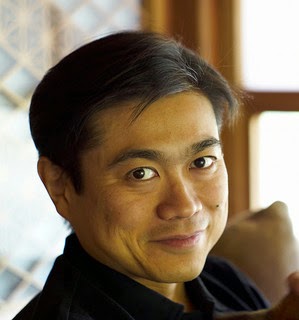
SIGGRAPH Keynote Speaker Joi Ito on the Intersections of Creativity


SIGGRAPH is honored to have MIT Media Lab Director (and TED speaker) Joichi "Joi" Ito as our SIGGRAPH 2015 keynote speaker.

Mirroring the 2015 theme of "Xroads of Discovery," Mr. Ito’s body of work and experience spans the science, academic and business worlds. He’s an activist, entrepreneur, venture capitalist, and advocate of emergent democracy, privacy, and Internet freedom.

Known for his willingness to dig deeply to find unorthodox solutions and connections, Mr. Ito is the perfect fit for SIGGRAPH’s thoughtful, innovative and curious community.

Joi Ito In His Own Words

Joi Ito - SIGGRAPH 2015 keynote speaker
SIGGRAPH 2015 Keynote Joi Ito
From Joi.Ito.com:

In his post “The Creativity Compass,” Ito looks at four different creative quadrants (Artist, Designer, Engineer, Scientist) and how they tend to become compartmentalized. Ito notes, “I think a lot of the most interesting and impactful creative works tend to require all the use of all four quadrants. Many of the faculty at the Media Lab work in the dead center of this grid - or as I like to call it, this compass - or perhaps they lean in one direction, but they're able to channel skills from all four quadrants.”

He goes on to add, “The tyranny of traditional disciplines and functionally segregated organizations fail to produce the type of people who can work with this creativity compass, but I believe that in a world where the rate of change increases exponentially, where disruption has become a norm instead of an anomaly, the challenge will be to think this way if we want to effectively solve the problems we face today, much less tomorrow.”

In a post entitled "Antidisciplinary," Ito writes:

"The Media Lab focuses on 'uniqueness, impact and magic.' What our students and faculty do should be unique. We shouldn't be doing something that someone else is doing. If someone else starts doing it, we should stop. Everything we do should have impact. Lastly, things should induce us to be passionate and should go beyond incremental thinking.

'Magic' means that we take on projects that inspire us. In the Lifelong Kindergarten group, researchers often describe the 'Four Ps of Creative Learning' as Projects, Peers, Passion and Play. Play is extremely important for creative learning. There is a great deal of research showing that rewards and pressure can motivate people to 'produce,' but creative learning and thinking requires the 'space' that play creates. Pressure and rewards can often diminish that space, and thus, squash creative thinking."

A true innovator, Joi Ito is changing the way we think about collaboration! We hope you join us at SIGGRAPH 2015 to discover more of his vision. 


14 January 2015

Q&A with SIGGRAPH 2015 Technical Papers Chair Doug James

Technical Papers chair Doug James shares his passion for the program in an exclusive interview below. 

Reminder: Technical Papers submission form and abstract are due 22:00 UTC/GMT, 19 January 2015. The final paper is due 22:00 UTC/GMT, 20 January 2015.


How did you become involved with SIGGRAPH?

My first SIGGRAPH was in `99 when I published a paper as a graduate student at the University of British Columbia in Vancouver, Canada. Since then, I've continued to be very excited about interactive physics simulation--and graphics and animation research in general--and found SIGGRAPH to be a great community for advancing those ideas. As a computer graphics professor, it is the natural venue for our research.

What motivated you to become Technical Papers Chair?

SIGGRAPH has always been the primary venue for my research activities, and I have been a long-time volunteer in the review process of the Technical Papers program, having reviewed hundreds of papers. I was honored to be asked to be the Technical Papers Chair: it's a great opportunity for me to help maintain and improve the widely respected SIGGRAPH review process established by our community.

What advice would you give to someone who is interested in submitting content for the first time?

For new submitters to the Technical Papers program, I recommend reading the Technical Papers "call for papers" and related website content. In particular, there is an extensive Technical Papers FAQ that addresses many common questions. The basic recipe for showcasing your work in the technical program is to have a novel idea, explain it clearly in written form, and to provide evidence (be it data, images or video) to help support claims that your method improves upon the state of the art in some specific ways. Understanding and citing related works, and being able to explain the pros/cons of your approach, are also critical components. Getting feedback from experienced colleagues is also a good way to improve your submission.

What makes this program different from the others at SIGGRAPH?

The SIGGRAPH Technical Papers program is the premier international forum for disseminating new scholarly work in computer graphics and interactive techniques. We focus on the technical details underlying a broad spectrum of computer graphics innovations, and seek to document and disseminate these advances in all their glory.

Outside of Technical Papers, what other areas of the conference are you particularly excited about?

Everything. Seriously. I strongly recommend trying to look at a little of everything if you can, especially if it's something less familiar or different for you--come for the technical papers, but stay for the art and games. Things always change, and you never know what you will see next year.

How has SIGGRAPH influenced you personally and professionally?

We're inseparable. It's given me a lifelong venue for practicing and experiencing exciting technical and artistic innovations.

21 November 2014

SIGGRAPH 2015 Call for Submissions


SIGGRAPH 2015 will feature the highest caliber of technical skills and creative talents. In order to ensure the best quality of work is presented, SIGGRAPH 2015 is excited to officially open its Call for Submissions. 
Join thousands of your fellow artists, scientists, and scholars in computer graphics and interactive techniques--including areas pertaining to games, fabrication, visual displays, and immersive digital environments--and submit your work for consideration. Whether you will be a first-time attendee or are a conference veteran, presenting at SIGGRAPH 2015 is an incredible opportunity that will take your career to the next level. 
LEARN MORE about SIGGRAPH 2015 directly from the program chairs!

Important Submission Deadlines

Please note that every piece submitted to SIGGRAPH 2015 through the Call for Submissions is reviewed by a highly qualified jury composed of top practitioners in the relevant field. Because we want each jury to have the time to review each piece carefully, submission deadlines generally are several months ahead of the conference itself. All submission deadlines are strictly enforced, so be sure to plan accordingly.

All deadlines are 22:00 UTC/GMT. Please verify deadlines in your time zone via THE WORLD CLOCK CONVERTER. 
13 January 2015
19 January 2015 (Submission form due)
20 January 2015
(Paper deadline)
21 January 2015
(Upload deadline)
27 January 2015
30 January 2015
10 February 2015
17 February 2015
General Submissions:
3 March 2015
31 March 2015
28 April 2015
6 May 2015
24 June 2015

Poster submissions can occur prior to the 17 February General Submissions deadline or the 6 May Late Posters deadline. In both cases, Posters are reviewed using the same criteria and by the same jury. Authors submitting prior to the first deadline will get decision notification in late April.

14 August 2014

SIGGRAPH 2014 Highlights from Vancouver

SIGGRAPH Technical Papers Fast Forward was a popular session on Sunday evening.
VANCOUVER, British Columbia - SIGGRAPH 2014 returned to Vancouver, Canada, for its 41st conference and exhibition. From 10-14 August, 14,045 artists, research scientists, gaming experts and developers, filmmakers, students, and academics from 50 U.S. states and 75 countries gathered to experience cutting-edge computer graphics and interactive techniques. There were 6,156 participants from the host country of Canada.

The SIGGRAPH Exhibition ran from 12-14 August and attracted 175 exhibitors.
The conference boasted more than 40,000 sq. ft. of exhibit space featuring 175 participating companies - an increase from the 2013 conference in Anaheim, California. Eighteen countries were represented on the exhibit floor, 44% of which are based outside of the U.S. - including 28 companies from Canada. Furthermore, 25% of the exhibitors were first-timers, which was the highest percentage in four years.

Dave Shreiner
"This year’s exceptional education, numerous networking opportunities, and mind-blowing technological advances appealed to everyone," said Dave Shreiner, SIGGRAPH 2014 Conference Chair. "SIGGRAPH 2014 offered an incredible exhibition experience, innovative and inspiring content, and celebrated the impact that graphics and technology can have in every day life. Finally, the city of Vancouver was amazing - from the mayor’s office to the convention centre to the economic commission to the tourism bureau."

An impressive 1,533 speakers and contributors participated in the conference through a variety of talks, sessions, panels, papers, presentations, tutorials, and screenings.

Highlights from SIGGRAPH 2014 included:

The impactful keynote presentation by Not Impossible Labs co-founder Elliot Kotek shared a simple message: “Help One. Help Many.” Kotek showed how technology can have an immense impact on humanity by sharing stories of Not Impossible Labs’ efforts including Project Daniel, which outfitted Sudanese amputees with new prosthetic limbs thanks to 3D printing technology. 

Thierry Frey (center), SIGGRAPH Emerging Technologies Chair, leads the Vancouver mayor on a tour.
Vancouver Mayor Gregor Robertson made an appearance, addressing members of the press and visiting SIGGRAPH 2014’s Emerging Technologies venue. He expressed his delight that emerging technologies and computer graphics have caused "an influx of talent and great people to our city" as well as thousands of jobs for its citizens. The Vancouver Economic Council sponsored the Emerging Technologies area. The virtual reality experience “Birdly” won the Laval Virtual award and the AR/VR competition.
Jerome Solomon served as the 2014 Computer Animation Festival Director.
The Computer Animation Festival presented the world's most innovative, accomplished, and amazing creators of digital gaming, film, and video. The festival received more than 450 juried submissions in 2014. SIGGRAPH 2014 Computer Animation Festival award winners included:

Box
BEST IN SHOW AWARD
Box (United States)
Directed Tarik Abdel-Gawad, Bot & Dolly

Paper World
JURY AWARD 
Paper World (Hungary)
Directed by Dávid Ringeisen, László Ruska, Moholy-Nagy University of Art and Design

Home Sweet Home
BEST ANIMATED SHORT 
Home Sweet Home (France)
Directed by Pierre Clenet, Alejandro Diaz, Romain Mazenet, Stéphane Paccolat, Supinfocom Arles

Wrapped
BEST STUDENT PROJECT PRIZE
Wrapped (Germany)
Directed by Roman Kalin, Falko Paeper, Florian Wittmann, Filmakademie Baden-Wüerttemberg

Gravity
BEST VISUAL EFFECTS
Gravity (United Kingdom)
Directed by Alfonso Cuarón, Esperanto Filmoj

Kinematics
BEST VISUALIZATION & SIMULATION
Kinematics (United States)
Directed by Jessica Rosenkrantz, Jesse Louis-Rosenberg, Nervous System

The Crew
BEST GAME
The Crew (France)
Directed by Maxime Luère, Dominique Boidin, Rémi Kozyra, Unit Image

RYSE: Son of Rome
BEST REAL-TIME GRAPHICS
RYSE: Son of Rome (Germany)
Directed by Chris Evans, Peter Gornstein, Martin L’Heureux, Crytek

The Pony
BEST COMMERCIAL ADVERTISEMENT
Three, "The Pony" (United Kingdom)
Directed by Dougal Wilson, Blink Productions

SIGGRAPH 2014 Technical Papers Chair Adam Finkelstein  
Technical Papers is the premier global forum for presenting groundbreaking research from today's leading experts. The SIGGRAPH 2014 Technical Papers program featured 173 Technical Papers, selected among 550 submissions. The Technical Papers detailed new advances across many fronts, including 3D printing, creating water and snow with particles, deformation and distortion, and more.

For more details about SIGGRAPH 2014, visit the official SIGGRAPH 2014 Media Blog: http://siggraphmediablog.blogspot.ca/  

Download photos from SIGGRAPH 2014: www.flickr.com/photos/siggraphconferences/ 

Join Us in Los Angeles in 2015

SIGGRAPH 2015, the 42nd International Conference on Computer Graphics and Interactive Techniques, will be held 9-13 August, 2015 at the Los Angeles Convention Center.

13 August 2014

Q&A: DreamWorks Animation Experts Talk 'How to Train Your Dragon 2'

SIGGRAPH 2014 sat down after DreamWorks Animation Presents: The Growth of "How To Train Your Dragon 2" for a quick Q&A with panelists on their process.

Q: Which part of the animation process on How To Train Your Dragon 2 was most rewarding and why?

A: Lighting was the most rewarding part of HTTYD2 [for me]. This was my first film in the VFX Supervisor role so I had a lot more involvement and exposure with a much broader range of the film making than I had ever had before, which was really enjoyable; however, my background is in lighting and for this film I was able to collaborate very closely with renowned Cinematographer Roger Deakins.

 Roger is incredibly inspiring and I was able to learn so much from him in such a relatively short time. I'm very proud of all aspects of the film, but I think for me the lighting represents an area of personal growth that far exceeded my expectations. (Dave Walvoord, VFX Supervisor)

Q: In your production session panel you noted that the fans helped shape the main character’s final look, where else did you find inspiration for Hiccup and his surroundings?

A: I think I would like to elaborate on the fans contribution to the film. When our teaser trailer came out many of our fans filmed themselves watching their reaction to the trailer for the first time. Apparently this is something fans do now, but I had never seen anything like it. Our fan reaction was so strong that it became very inspirational for the crew. Our artists were constantly posting fan reactions on Facebook for their friends and other members of the crew to see. Our editorial staff gathered a number of them and cut together a piece that showed 8 people's reactions at the same time. 

The other thing that happened is that we saw how much these characters meant to our fans. Suddenly the entire crew was aware of having a responsibility to deliver their best efforts because we could see how much what we were doing meant to our fans. It would not have been possible for anyone to deliver a more motivational speech than what our fans had given us. It was a very unique experience and I can only wonder how much social media will grow to include the fans in our collaboration on future films. (Dave Walvoord, VFX Supervisor)

Q: Have you attended a SIGGRAPH conference in the past? If yes, tell us your favorite part about coming to SIGGRAPH. If no, describe your experience so far.

A: Yes, I've been coming to SIGGRAPH for years. In fact, the first two times was as a demo artist back in 1994 and 1995. I associate SIGGRAPH with the excitement that comes from the exploration of all things new and reconnecting with friends and former students. The Electronic Theater is a big highlight, too! (Gil Zimmerman, Head of Layout)

Don't miss tonight's special screening of How To Train Your Dragon 2 in Ballroom A/B, West Building at 8 p.m. at the Vancouver Convention Centre. DreamWorks will be giving away 10 posters autographed by the film's producer and director to the first 10 attendees in live.

SIGGRAPH 2014 Emerging Technologies Media Tour

Click here to take the Media Tour.
SIGGRAPH 2014 Emerging Technologies Chair Thierry Frey (center in lavender shirt) takes you on a tour of this year's advancements in several fields - from displays and virtual reality technology to haptics and robotics, as well as innovations that apply to film and game production. The Vancouver Economic Commission is the official sponsor of the 2014 Emerging Technologies area.

12 August 2014

Vancouver Mayor Gregor Robertson Embraces SIGGRAPH

Mayor Robertson (left) viewing the "Birdly" installation, which simulates bird flight in Emerging Technologies
Vancouver Mayor Gregor Robertson made an appearance at SIGGRAPH 2014 yesterday, addressing members of the press as well as visiting the Emerging Technologies. Mayor Robertson expressed his delight that emerging technologies and computer graphics have caused "an influx of talent and great people to our city" as well as thousands of jobs for its citizens. The Vancouver Economic Council sponsored the Emerging Technologies area.

Keynote Elliott Kotek Captivates SIGGRAPH 2014 Attendees


Elliott Kotek, co-founder of Not Impossible Labs, gave an outstanding keynote presentation yesterday at SIGGRAPH 2014. Sharing that volunteerism is near and dear to his heart, Kotek told the audience about 14-year-old Daniel, a refuge in war-torn South Sudan, who had both arms amputated as a result of a terrible bombing. Unfortunately, Daniel is only one of 50,000 amputees. Kotek and his team, determined to help Daniel, outfitted the young man with an arm using a 3D printer, allowing Daniel to feed himself for the first time in 2 years.

While the original goal was to help Daniel, the ultimate objective is to "Help One. Help Many." Locals were instructed on how to use the 3D printers so that other amputees will also have the opportunity for a better quality of life. Hence, Project Daniel was born.

Here's the YouTube link to that video:

Kotek's message is simple. Technology can have an immense impact on humanity. He encouraged all SIGGRAPH 2014 attendees to find their own "Daniel" and placed importance on community responsibility.

“Everyone has access to tools," Kotek said, "You don’t need permission to be innovative.”

To learn more, visit www.notimpossiblelabs.com or view "Project Daniel".

Follow Kotek on Social Media:

  • @notimposs
  • Facebook: NotImpossible
  • Instagram: Not ImpossibleNow

SIGGRAPH 2014 Recap: Day 1


SIGGRAPH 2014, the 41st International Conference and Exhibition on Computer Graphics and Interactive Techniques, made its return to Vancouver, Canada, when it officially opened its doors to attendees on Sunday, 10 August. The first day of the conference featured several Talks, Panels, Birds of a Feather events, Studio Courses and StudioXperience interviews, not to mention Technical Papers Fast Forward, ACM SIGGGRAPH Theater Events and Art Gallery.

11 August 2014

Brazilian Paulo Henrique Machado Attends SIGGRAPH 2014 Via Telepresence

Paulo Henrique Machado
Paulo Henrique Machado has lived in a room at Clinicas hospital in Sao Paulo, Brazil since he was an infant. As a baby, he suffered paralysis brought on by polio, and is confined to bed and hooked to an artificial respirator 24 hours a day. In 46 years, he has left the hospital only a few dozen times. He saw the ocean for the first time at the age of 32. Much of Paulo’s childhood was spent in his hospital bed, dreaming of the world outside. "For me, playing football or with normal toys wasn't an option -- so it was more about using my imagination," he told BBC News last year.

3D model made by Paolo
Despite his physical limitations, Paulo has trained as a computer animator, and is now making an animated series for children about his life. The series, which is called “The Adventures of Leca and her Friends” is the embodiment of his greatest wish -- to show children that being different is okay, and that everyone is special in their own way. The series was inspired by a book written by his lifelong friend, Eliana Zagui, who is also paralyzed as a result of polio, and lives in the same room as Paulo.

Storyboards from Paolo's series.
For many years, Paulo has dreamed of attending SIGGRAPH. This year, SIGGRAPH and Double Robotics made that dream come true through the use of a telepresence robot. The nicknamed "R2 D2"--Paolo clearly has a great sense of humor--is the first telepresence robot he has ever employed.

SIGGRAPH 2014 Conference Chair Dave Shreiner noted:  “SIGGRAPH is a community. Paulo is part of our community, and we take care of our own.”

You may spot Paulo driving around the conference, steering the Double Robotics robot from his hospital room in Brazil. Please stop and say hello! He speaks some English, but will have Portuguese-speaking SIGGRAPH student volunteers with him to translate.

Paulo interacting with other SIGGRAPH attendees.
On Sunday, August 10, Paulo saw the Vancouver harbor for the first time, and was taken aback. He turned the robot left and right to look out the glass windows of the Vancouver Convention Centre. “Do you know what this means to me?” he asked SIGGRAPH, when questioned how he liked the robot. “It gives me the freedom that I physically can’t have.”

For more information on the series, email leca.e.seus.amigos@gmail.com.

BBC News Article: http://www.bbc.com/news/magazine-23364127

Catarse Campaign: http://catarse.me/en/leca

10 August 2014

SIGGRAPH 2014 Chair Dave Shreiner's CGW Interview!

Tell us about yourself on a personal level.

I grew up in a technology-isolated backwater in central Pennsylvania, where computers weren’t particularly available.  I became interested in computer graphics as a wee lad when I encountered a 2D-vector motorcycle jumping game.  I stunk at it (for the $3 my folks had the patience of watching me waste), but it made me proclaim I was going to make these games when I was older.  To date, I still haven’t done that, but I hopefully still have some time.

According to my educational transcripts, I was a mediocre student who probably shouldn’t write long sentences (or essays like this) or work with numbers with more than two decimal places, even though I graduated college with a Bachelor's degree in Mathematics.  I didn’t study computer science since I knew I would sit behind a computer and hoped I could pick up what I needed to know along the way.  I usually didn’t do my homework.  Instead, I fiddled with computers drawing graphs of equations.  Turns out there are people who need that done, and I was fortunate to have a friend who knew someone who needed that type of help.  After getting the job, I sat in a closet in one of the school’s chemistry labs, drawing molecules on a Silicon Graphics (SGI) 4D 210 GTX workstation, and my life was forever transformed.  Not only because I was doing cool computer graphics, but also because it was the first time I had gone to SIGGRAPH.

After I left school for good, I got a job in a bomb factory in Lancaster, Pennsylvania doing flight simulation on – you guessed it – another SGI machine.  Next, I moved west to Silicon Valley to work for Silicon Graphics making those amazing (at the time) machines.  I also went to SIGGRAPH again.  And again.  And again.

I met my then-to-be wife at SGI (she worked there too), and took her to SIGGRAPH.  I got involved in some cool technology: a computer graphics library named OpenGL, and wrote a course about it.   Then I helped present a course at SIGGRAPH on OpenGL.  Then I helped write a book about OpenGL, and kept talking about OpenGL and graphics at SIGGRAPH.  I kept presenting courses, and then helped organize them at SIGGRAPH.

I know, dear reader, you’re seeing a pattern here.  There’s been a lot of SIGGRAPH in my life, and I think that’s just awesome.

The last few years, I’ve been working on graphics systems for mobile devices, and going to SIGGRAPH, and I thought it’d be cool to combine those two things, so I volunteered to chair the 2014 SIGGRAPH conference to see if I might achieve that somehow.  My wife attends the show as well, and I’m still presenting courses there too.

But enough about me …

What do you bring to SIGGRAPH in terms of your professional experience?

SIGGRAPH 2014 will be my 26th consecutive SIGGRAPH conference (which doesn’t include attending SIGGRAPH Asia), and include my 26th and 27th presentation at the conference. I’ve also been volunteering for SIGGRAPH for the last 12 years in a multitude of roles including organizing programs at the conference, and supporting the SIGGRAPH organization.

I’ve also been a practitioner, engineer, and educator in the field of computer graphics for a few years more than my SIGGRAPH attendance.  I’ve co-authored four books on subjects relating to computer graphics, and helped evolve the technology used to create computer-generated images.

I also bring some business knowledge about project planning, marketing, communications, and finance, which has proved invaluable in being the conference chair.

Most importantly was being able to convince a number of talented friends and colleagues to volunteer their precious time to make this year’s SIGGRAPH conference one for the record books.  They’re a fantastic committee, and you’ll easily see how talented they are.

What made you take on the position of chair?

SIGGRAPH has been a great help to my career and personal success, and being conference chair is kind of my ultimate way of giving back to the community.  While I’ve presented numerous times at the conference, and worked on previous conference committees, doing it at this level is an unparalleled honor!

Additionally, it provided a somewhat unexpected career growth opportunity.  I was curious about motivating and leading a team, and this is one of the best environments to do it in.  The caliber of volunteers is beyond measure, and they’re all super nice people.  So it’s a great place to work on building leadership skills as well.

What other SIGGRAPH positions have you held?

When I first started volunteering for SIGGRAPH about 12 years ago, I was webmaster for the organizational website.  After a few years presenting courses, I was invited to review courses, which lead to being on the courses committee, including chairing the courses committee in 2006, and again in 2009.

What can attendees expect this year at the conference?

This year has a large focus on technology, particularly in using the latest devices and techniques to personalize experiences, from new techniques on mobile devices to creating physical manifestations of their virtual objects using 3D printing and drones.  We also showcase the leading research in all the disciplines that compose our community (we had record numbers of technical and art papers this year), provide proactive panels and a world-class set of educational courses.

This year’s conference committee also recognized how the computer graphics industry is changing, and will have several events focused on independent practitioners – from gamers to app developers to those working on augmented- and virtual reality.  I discuss this more later.

What is this year's theme?

Why have just one?  There were a number of directions that I had hoped to incorporate into SIGGRAPH 2014, as well as letting the passions and creativity of my team lead them as well.  With that scenario, we’re emphasizing a lot of interesting elements…

One is a focus on mobile graphics [one of my professional interests].  I consider mobile phones and tablets the latest generation of devices for producing computer graphics.  However, with their cameras, hi-res display, GPUs, multiple CPUs, GPS and other sensors, they’re some of the most advanced, integrated computing systems in history, and they’re enabling all sorts of interesting applications, such as augmented reality, social gaming, and computational photography.  We’re challenging our community to show us how to use these devices in new and interesting ways.

We’re also emphasizing gaming and real-time graphics, particularly as the practitioners of those fields are producing works that rival blockbuster movies.  That’s an exciting growth area, and a natural fit for SIGGRAPH.

And another focus that I am also excited about is the physical creation of these virtual 3D objects we’ve all been enjoying over the last decades. With 3D printing becoming almost a commodity, we’ll be providing solutions for attendees to do everything from necessary to design and manufacture their 3D creations using the latest in 3D manufacturing technology.

How does the theme resonate with you on a personal level?

I’m an engineer and technologist by trade, and seeing what creative individuals can do with the modern technology we have is very exciting to me personally.  As I mentioned, phones and tablets put very capable graphics systems in the hands of an ever-growing population.  Computer graphics and interactive experiences — the fundamental tenets of SIGGRAPH — are now more accessible than ever before, and people are enjoying our media more than ever.  The work of our community is improving the lives of ever more people, and that’s a noble and exciting venture.

How has SIGGRAPH influenced you personally and professionally?

SIGGRAPH is the rocket that pretty much launched my career.  It’s a bit of a long story, but I think it really demonstrates the value of SIGGRAPH.

I knew that I was going to be a computer jockey around my freshman year in high school, but I wasn’t sure how or what precisely I was going to do.  I bumbled around high school and college playing with computers and doing math, but without a whole lot of direction.  Near the end of my college experience, I was lucky enough to have a colleague suggest that I should go to this conference called SIGGRAPH.  Sounded cool, but I really had no idea what to expect.  That was 1989 — my first conference — even though I could only afford to go to the exhibition, it totally hooked me.  I saw what smart, creative people were doing with graphics workstations (at the time), and it provided the clear picture of what I wanted to do.  It also showed me how little I knew about the field, and what I really needed to know to succeed.  I went home with a pile of books, and a lot of enthusiasm.

I registered as “full conference” the next year, and took in everything I could.  It was well worth the investment. I was in total awe of the speakers and talents of everyone there, and the images they were making.  I also thought that I could never be one of those folks contributing to the content of the show.  But I kept coming, learning, and making new friends who were happy to share and increase my knowledge.

I kept going to the conference, and after about 10 of them, I got to do my first course presentation.  I was fortunate to discuss a topic, OpenGL, which was important to a number of conference attendees, and it was at that point I realized what SIGGRAPH had done for me, but also what I could do for others.  I’ve always been kind of an overzealous Boy Scout, and this was just killer: helping others develop their skills while talking about something I loved.

SIGGRAPH 2014 will be my 26th consecutive conference, and my 17th year of presenting at the conference, where I’m once again presenting a course, as well as talking on a panel.  It never gets old.

Without SIGGRAPH, I’d probably still be sitting in a cornfield in Pennsylvania, probably working on bar-code scanners (the first computer job I ever interviewed for), and not helping delight minds and eyeballs all around the world.

What are you looking forward to most at the show?

On a personal level, I’m excited to take my parents to SIGGRAPH.  My wife (a 20+ year attendee) and I have waxed lyrical about the show, but my folks have never experienced it.  I’m looking forward to them being totally blown away, but also sharing with them an important part of my life, and seeing how much enjoyment I get from SIGGRAPH.

Specific to SIGGRAPH 2014 … there’s so much.  I want to see what my committee has brought to the show. They’re a super motivated bunch, and they keep mentioning all this awesome stuff, which should make this a non-stop experience for the five days of the conference.  Also, we’re doing a number of new things this year and it’s going to be very interesting to see what the community does with them.  Will they like the new activities?  Was there value for the attendee?  It’s suspenseful, and I dig that.

Anything special we can expect from the conference this year since it is in Vancouver?

Absolutely!  First, it’s in Vancouver; one of the most beautiful places I’ve been (and I’ve been a lot of places!).  The city is the perfect fit for SIGGRAPH and me – the combination of technology, nature, art, and beauty.

We’re also doing a number of special events that are a little outside of the normal SIGGRAPH venues.  We have special screenings of blockbuster movies, a behind-the-scenes look at how game art is developed, demo reels running during “daytime selects”, an AR/VR contest, a mobile pavilion, an independent developers area in the exhibition, an awards presentation for the Computer Animation Festival winners, and a cocktail party for independent app developers to show their work, to name a few.  There are also a few other surprises, but also all the magic that makes SIGGRAPH special.  You just have to be there.


Back to Vancouver so soon?

Sure.  I’d personally love to see SIGGRAPH in Vancouver many more times.  The city is incredibly supportive of having us there – the Mayor even came to personally welcome and thank us for coming at one of our recent planning meetings.  Vancouver’s also a vibrant and growing technology hub, which we’re hoping will provide lots of opportunities (whether for education, employment, or enjoyment) for our attendees.

How has the conference managed to stay relevant given the overall trend toward smaller and more targeted trade shows?

When you get your conference chair secret-decoder ring, you learn that we describe SIGGRAPH as a 13-ring circus.  There’s something for everyone, but as your question alludes to, all that wonderfulness can make it difficult for folks to see what’s personally relevant to them.

I think SIGGRAPH is about fusion: combining technology, art, science, and magic to create incredible experiences – not just pictures.  Whether that experience is watching an incredible scene from a movie, helping a medical professional provide better care using better technology, or perhaps making a complex subject easier to understand through a more interactive learning experience, SIGGRAPH is the place where practitioners of those independent disciplines converge.  It’s all about learning, sharing, and being inspired to do explore and do something new.

Many things in our modern lives are segmented into small portions with a narrow focus.  You watch a video online, read an academic article, play a game, see your friend’s status on social media – in an ever-more connected world, we tend to do much more by ourselves.  SIGGRAPH brings thousands of practitioners from numerous fields together to exchange ideas, demonstrate the future, learn, and make new friends.  You can’t do that anywhere else at this scale.  There is no substitute, and that’s what makes SIGGRAPH special.

What are the exhibition numbers looking like right now?

We are expecting 150 exhibitors to reserve over 40,000 square feet of exhibit space so there will be plenty to see in the Exhibition. Moreover we’ve almost sold out the Exhibition and have more new exhibitors and international exhibitors than we were expecting. Some old friends returned this year after an absence from our Exhibition last year.  The Exhibition continues to be one of the top reasons our attendees come to SIGGRAPH as they tell us it is the best place to meet, find new products, communicate about career opportunities, and develop relationships with vendors in the industry.

How will your background and interests affect this year's show? (Every chair's influence is felt to some degree on the overall show.)

As I previously mentioned, we’re in a renaissance in making computer graphics accessible through mobile devices.  The fact that you can have an HD resolution display 18 inches from your nose backed by a high-powered computer I think opens a world of opportunity.

The SIGGRAPH conference has oscillated its primary focus over the years.  Early in my attendance it was all about hardware and systems, and over the years has migrated more towards amazing images and how to produce them.  I believe the quiet revolution that is making computer graphics ubiquitous should be combined with our expert knowledge of creating compelling images to make new experiences.  The industry for computer graphics and interactive techniques is changing — from large corporations to individual developers — and I really want to enable that at this show.  Wish me luck!

What mark do you hope to leave on SIGGRAPH 2014?

The same as any conference chair – help create an experience that rewards our attendees for coming.  I’m honored to have been given the responsibility to oversee the show, but what’s really important is that all the members of our great community enjoy, learn, and celebrate what we all love.